Sunday, July 24, 2011

psalm 119: An Alphabetical Love Song To God For God's Self-Revelation In Scripture.(Psalm 119:73-80)

I tried to find an equivalent to Palm 119 in popular culture, to try and help us understand this long and complex psalm,  and all I could come up with was  (if you'd been in the church where I preached this mesage on Sunday you would have seen me serenade my wife with this wee song)

"A," you're adorable, "B," you're so beautiful,
"C," you're a cutie full of charms.
"D," you're a darling and "E," you're exciting
And "F," you're a feather in my arms.

Of course it goes on and it is one of those silly love songs Paul McCartney says we’ve had enough of …It’s called the alphabet love song or A you’re adorable, and Psalm 119 could be (click for words to appear on screen) called an Alphabetical Love Song To God For God's Self-Revelation In The Scriptures. You see Psalm 119 is an acrostic poem or prayer, drawing together a group of twenty two  stropes (verses of different lengths), or even a whole selection of similar poems and prayers from different writers, and structures them to start with each letter from the Hebrew alphabet. In some translations it’s hard to get a grasp of the structure of the Psalm, but recently bibles have the Hebrew letters printed to help us understand it.

It’s one of only a few Psalms in the collection that does not have a title that attributes it to a certain author. Its theme of true happiness in life coming from studying and keeping God word reflects that of Psalm 1, another unattributed psalm, which is placed as an introduction at the beginning of the collection.  This has led scholars to believe that it is the work of the person or people who put the psalms together in the form we have them now.
It also means it comes from a time close to the exile in Babylon or just afterwards, where the Jews striped of the temple and its rituals and rhythms, sacrifices and priests have found that they encounter God in a way that they can maintain their identity as God’s people in the scriptures, the written scriptures that were available to them.
It seems appropriate to give praise to God for that by using both the alphabet used to write the scriptures and in such a long psalm a whole raft of different literary forms, like lament, hymns, and wisdom sayings that make up the rest of the Psalms to praise God for the scriptures and to express a desire to live a life of conformity to the Torah’s expression of the will of God for human life. It’s an expression we can share as well when we hear Jesus words at the end of the sermon on the mount that the solid foundation for life is to hear his words and put them into action and also Paul's encouragement to Timothy (2 Timothy 3:16-17) to keep reading the scriptures because they are spirit breathed and good for instruction and correction so that we may be equipped for every good deed.

Now some have said that in this psalm they see the beginning of pharaseeism in Jewish religious life. That the way to be holy is to rigidly keep the law of Moses, the binding chains of legalism, which of course is a trap that we can easily fall into, and evangelicals are often accused of worshipping the bible rather than God, but as Old Testament scholar Walter Brueggeman says this is not the case “ It is Yahweh who is the portion of the speaker , not the Torah nor one’s keeping of it” In verse 57 the psalmist clearly states " The LORD is my portion". We read scripture to encounter and know the God who has revealed himself in his dealing with his people. We read the New Testament to encounter by the spirit of God, God’s ultimate  self- revelation in becoming one of us in Christ Jesus.

Psalm 119: 73-80 starts with the Jewish letter ‘Yod’ and in it we capture something of the whole of the Psalm. Firstly, this portion is one of only two in the psalm that uses the eight synonyms, or words with similar meanings that are used to describe the ‘torah’ or scriptures. Although the NIV translation does not bring this out as much. 
 In verse 73 it starts with creation: that we were fashioned for a relationship with God,  that the human intellect is a gift from God and the prayer is that God might grant understanding so the psalmist may learn God’s commandments. In John’s Gospel  Jesus tells us at that last supper that  he won’t leave us as orphans but will send a helper like himself, the Holy Spirit who will lead and guide us into all truth, convict us of our need for God. It is the spirit who opens and interprets the scriptures to us. Yes we need to engage our brains and use our God given intellects, we need the gifts of people who study and understand the scriptures, but in the midst of that it is the spirit at work, that makes them living words.

    Then we see that the psalmists hope is that people might be encouraged as they see that He has put his trust in God and tries to live his life out of that. He understands God’s vision and God’s purpose is that we all reflect God’s character to the world around us; we do not keep God’s word in a vain attempt to appease and earn the love of an angry or distant, disinterested deity. Rather to reflect the grace and love we are shown in God's covenant faithfulness, to those around us. The psalmist is also aware that he is living in an environment where there is opposition to his faith. The arrogant try and lead him away from his trust in Yahweh. If the setting is the exile he is in Babylon where the Jews had been taken into captivity, as a result of their not keeping the covenant relationship with Yahweh, they have been humbled. But in his reading and applying the scriptures he has found hope, he had found something of worth and delight, in the face of that oppression. In verse 79 and 80 there is a hope that people might be able to look to him to then find someone to help them find the same hope. In this psalm we see that the reason that the psalmist prays for understanding of the scripture is that he might live a life trusting in God and that through that be able to show an alternative way of life to the world around him and be of service and help to others pointing them to the source of true happiness and fulfilment in life, a covenant relationship with God.

Well what for us today, what new life from this old song? How do we meet God in the melody of this complex psalm?

Firstly there is the encouragement that it brings to us to read and study the scriptures. To understand them for ourselves and with the spirits help apply them to the way we live. I remember  when I was growing up on a regular basis we would have talks in church or at Youth group that was all about what I started calling evangelical Guilt… You know “have you had your quite time today?” I do believe its important for us to regularly read and study and pray through the scriptures but  I don’t want to do that to you ? Firstly, because psalm 119 does not do that and  secondly if I’m honest I struggle to keep and maintain a regular daily bible reading regime. Psalm 119 encouraged its reader about the positive value of the scriptures in keeping and growing our relationship with the God who chooses to reveal himself to us in this way. We should read it because well  there are so many reasons like ABC… So I want to encourage us to capture the sort of wonder the psalmist has for the scriptures and share with you a story which I hope will help us recapture the wonder of having the scriptures readily available.

I wonder if we don’t take access to the scriptures in own language for granted these days. We can buy so many different translations and bibles, I even went on line a while back and came across a website where they were advertising bibles with different colour schemes on their cover, I think they even had interchangeable covers so that people could have a bible that would match the outfit they were wearing to church. The bible had become a Christian fashion accessory. You could even get a camouflage bible for when you went out hunting… mind you I couldn’t see the sense in that as you wouldn’t want to put it down out in the bush would you… if the camouflage  was any good you wouldn’t be able to find it again. You can have a bible with devotional notes for men and women, kids and teens, by your favourite tele-evangelist and mega church pastor. Can I also suggest that part of it is that it is a money spinner for most major publishing houses as it is the top selling book of all times. But we forget that having the scriptures readily available is a modern phenomenon, in our western world.  It’s something precious we have taken for granted.
This year is the 400th anniversary of the printing of the King James Bible in 1611. Part of the revolution of the reformation as  the scriptures to that point had been only available in Latin, the language of the scholars in the middle ages, and the bibles were so valuable and rear that they were chained to the front of the church. But as people like Martin Luther in Germany and the reformers in England realised  it was important that people have the bible in their own language. John Wycliffe who had provided an earlier translation of the bible into English and had paid the ultimate price for it, said that just like those early Christians were taught in their own common language so it is we too should have that opportunity. He didn’t think that as we are a priesthood of all believers that we should only have the scriptures mediated by clergy, we needed to read it for ourselves.  Of course down through those 400 years the King James Bible has become known as the book that changed the world, and there is an on-going process of translating the scriptures into an ever changing language, the language of today, to sit alongside what is such a great expression of the classical English language.  Down through the ages men and women have worked tirelessly to see that the Bible and the truth it reveals about God be available to all. The Clapham sect, people like William Wilberforce and evangelicals in 17th and 18th century England pushed through child labour reform  and education reforms because it was important that all people could read… why? Primarily it wasn’t so they could get a head in life… no it was so they could read the bible for themselves. People have gone and lived and worked in many places round the world to learn languages and translate the bible into those languages. Others have been persecuted and killed to bring scripture to people in countries where it is a banned book.

I was able to catch a glimpse of the preciousness of having the scriptures in your own language when I was in the youth pastor at St John’s Rotorua. Rotorua you may be surprised to find is one of the places round the country when there was a migration of people from the Tokelauan Islands. They came to work in the mills and forestry in the 1960’s. The Tokelau’s  is a collection of three atolls in the pacific. One Tokelauan man said to find them you go north to Samoa and turn left for 400 kms. But don’t blink you might miss them. They are one of the nations that is most effected by the spectre of climate change as there is no place more than 3 meters above sea level.  The gospel was bought to the Tokelau’s by Samoan missionaries and as the languages are quite similar, the Tokelauan Christians sung Samoan hymns and used the Samoan bible.  Just recently the Bible Society agreed to help with the translation of the bible into the Tokelauan  language. It was never going to be a financial success because there are not huge numbers of Tokelauans. So if you went down to St Johns in 2007-2009 on a Monday night you would encounter the Tokelauan elders from the Presbyterian, catholic and Pentecostal churches deep in discussion and study as the verses that had been translated were sent to the elders in various communities round the country to be proof read. On the white board would be conjugations of verbs and tenses. Discussions over syntax and meanings and other possibilities were had. I did wonder, almost cheekily,  about things like what was Tokelauan for camel.

Then the Tokelauan congregation arranged an outreach weekend where they invited the minister in charge of the translation project in Wellington to come and be the speaker. We attended the service as well… It was amazing to watch the reaction as for the first time these people heard the gospel portion and a psalm read out in their native language in the language of their heart. For the first time they had it written for them.  It was simply a photocopied piece of paper with the words on it. But you could see how much it meant to these people, it was something precious in their hands. They didn’t want to fold them but every person there that day took the portion of scripture and reverently put it in pockets or hand bags to take home. As you can see by the postage stamps it was a big thing for the whole Tokelau people. What a gift, what a gift we have.

Just as Psalm 119 gives praise to God for the written word that we can encounter God self-revelation and will for our lives and we need to realise what a precious gift we have in the scriptures. Not so precious that we chain them up or lock them away on a shelf somewhere like a family heirloom but that we allow them to do the work God has for them in our lives to be a lamp unto our feet and a light unto our path: To read and study them and with the spirit opening our eyes apply them, to glory of God.

Monday, July 11, 2011

A Prayer giving thanks for God's faithfulness in the past, today and on into the Future.

While the Rolling Stones might be able to sing 'Time (imagine the long drawn out craggy Mick Jagger voice here) is on my side... yes it is", with their faces showing more and more the advance of age, this prayer is an expression of the fact that "Time (think gospel choir, full harmonies, hands waving) is in God's hand's and maybe you too can add a "yes it is" Amen.   

It is a prayer that I am holding onto at the moment in the midst of what for me are uncertain times. It is a prayer of thanks and hope from behind the dark fractal  as I mentioned in an earlier blog entry. It was also the prayer I used on Sunday for a church service. Like all my prayers i try and have some sort of poetic structure... but seldom manage to go to great heights in that department. (oh and I love the image of the past, present and future watch... from a website called geeks gadgets could be a help for living in the moment).

Eternal God
Who holds our times in your hand
Who made us in your image.
Who while we were yet sinners sent Jesus Christ to live amongst us
And die on the cross to free us from sin and death
Who when Jesus rose and ascended to heaven sent your spirit to be our councillor and comforter
We proclaim your faithfulness
And thank you for your steadfast love

Faithful God
We look back remember and thank you for all you’ve done in the past
You knitted us together in our mother s womb
You have guided our steps all our lives
Always calling us to come and follow Jesus
You have meet with us and saved us
You walk through the sunny days and deep dark shadows that make up our lives
You empower us to live love and witness to you
We thank you for the people who have inspired us and helped us grow in you
We thank you for the people you have lead us to serve and love

Living God
We thank you for your presence and work in our lives today
It’s not just in the past
Today we are made new because of what you have done for us
Today you are teaching and leading us
You are calling us to be closer and closer to you
You are calling us to maturity in Christ Jesus
You strengthen us and encourage us
You invite us to seek justice, care and witness to you

God who is alpha and omega, beginning and end
You have our future in your hands
Our tomorrow with all its potential
Our next step our next sunrise and sunset 
You will lead us all our days
As you work your plans out in our lives
As you call us to continue to grow and to serve
You have our eternity in your hands
That we will dwell in the house of the Lord forever

You have been faithful in the past and you are faithful today
And you never change so we trust you with our future

Forgive us for our sins,  
Fill us afresh with your spirit
Equip us to serve you faithfully into the future
To proclaim and live the good news of Jesus Christ with holy boldness
To the glory of  our eternal God, father son and spirit

Saturday, July 9, 2011

Every Step Along The Way , God's Love Endures Forever (A Reflection On Psalm 136)

Psalm 136 is hard to read isn’t it? With that constant refrain again and again, “God’s love endures forever”,  disrupting the flow.

It was meant to be read antiphonally. The leader reads out the phrase and the congregation replies. Even then it becomes monotonous. ‘God’s  love endures forever’.  WE don’t do chants like that very easily in our culture.

Maybe it would be easy if we simply read it without the “God’s  love endured forever”   Let face it other psalms and other scriptures don’t need the constant interruption of “God’s  love endures forever”. I mean check out Psalm 135 right next to it verse 8-12 with the exception of parting the red sea tells the same story the same history using the same words, almost, without the interruption of  “God’s  love endures forever”

Psalm 136 is what’s called an Imperatival Psalm one that commands us to give thanks to the Lord. That’s how each of the first three lines start as they name God, “give thanks to the Lord”. That’s how it ends. Maybe that refrain repeated again and again like the lyrics of some silly modern pop song detracts us from hearing the imperative we only hear ‘God’s love endures forever.’

Yet if we were to do that to ignore it, write it off as a badly written Psalm, placed close to the back of the collection after all the good ones,  we’d lose something. We’d miss what is at the core of this psalm, ”God’s love endures for ever’, we’d miss the reason why we as God’s people are being commanded to give thanks “God’s  love endures forever”.  The Psalm asks us to give thanks to God because of his consistent grace and constant love shown to us. ”God’s  love endues forever”. Every step along the way .

His grace and great love is shown to us in creation. V4-9 explains it and draws us a picture of what God has done. Each of God’s amazing and great works is an example of the fact that his love endures forever.  God creating it all is not only as an example of God’s power but also of God’s love. Its purpose is to be enjoyed and we are to praise God because of its wonder and beauty and bounty.

By his understanding he made the heavens.  You know only now are we getting to terms with the cosmos. Rather I should say that humans are getting to look out further and further and maybe get out heads round how big and grand and vast the universe is.  Even at the peak of our science we  have come to the point of understanding how little we know. I mean scientists talk of dark matter and dark energy that make up about 70% of the universe. It’s called dark matter and dark energy because we do not yet have the instruments or the technology to actually see and observe it let alone comprehend it, we simply have calculated that for it all to make sense it’s out there.  But God in his understanding made it all. God knows its purpose, God knows the answers to the big questions we are only now being able to ask.

Who spread out the earth upon the waters?

Our Earth is a privileged planet. It’s amazing how everything works together to make life possible on this planet. Water the sun the moon all work together to make this planet the wondrous life sustaining place it is.  Science marvels at that, how we are close enough to the sun to give us the warmth we need but not close enough to be turned into a waterless barren wasteland. All these things the psalmist wants us to know is a sign of God’s constant love. It’s Shown in creation:  Way back as it was all being created and made. “God’s love endures forever”.

Then the psalmist moves on to show how the Lord’s constant love and grace has been shown through history. For the psalmist the focus of that was Israel. But that is only after we have seen it shown on a more universal scale in creation. In what we call general revelation, now we see it in God’s special revelation in the saving of Israel.

It may not start sounding very gracious in verse ten particularly if you were an Egyptian parent. But the psalmist remembers what God has done to get Pharaoh to release Israel from captivity. That the battle should go to such lengths. Then the LORD being with Israel through the red sea, through the wilderness, helping them to defeat an awesome array of enemy kings bent on their destruction and bringing them into the land. Every step along the way Israel is reminded that it was not their own strength their own ability, it was not by might or by power, but by my spirit says the Lord. It was grace, God’s undeserved, unwarranted love. Every step along the way from slavery to  freedom, was grace. God redeemed Israel, God saved them, God protected them, God lead them, God established them in the land. God’s love endures forever , every step along the way. Therefore they should praise God and give God thanks.

Then in verse 21 we move from the past to the present ‘God’s love endures for ever’ does not simply become a remembering of what has gone before, it steps into our lives. God remembers us in our low estate and freed us from our enemies. ‘God’s love endures forever” it wasn’t just way back then  it’s here and now.  It’s in our situations as we struggle with things that would bind and enslave as we wander in the wilderness.

WE can look back at our history and see God’s saving and redeeming grace moving on from Israel and on to Christ. God’s  love endures for ever’ A new covenant relationship in Christ’s life and death and being raised to life again. “God’s  love endures forever’.

The Holy Spirit, poured out on all who believe, being with men and women down through  the last two millennium as they have faithfully witnessed to Jesus. God’s  Love endures forever. To our own lives and our own times when we can see that God has considered us and saved us from the enemy of our soul from the power of sin and death, from situations that were trying to bring us down. Facing and dealing with social injustice. Every step of the way it was God’s grace, God’s undeserved love. “God’s  love endures for ever’.

We step into the frame.  It’s us. We see God’s  love endures forever in our lives. We should then give God thanks for all God has done for us, for God’s constant grace,  that is what the psalmist commands us to do. Don’t forget it ‘every step of our way “God’s  love endures forever’. That is why it’s there again and again, to be indelibly etched in our minds .

Even verse 25 which seems so out of place and says ‘ he gives food to every creature’ shows that God grace shown in creation is still being worked out  in God’s provision. Jesus picks this up to encourage us not to worry about money and provision, but to put first the kingdom of God, when he says the birds of the air do not sow and reap but God feeds them. Jesus uses God’s providence to encourage us to be unbiased in our love just as God is, observing that God makes the rain to fall and the sun to shine on the just and the unjust. 

The historian who is the main character in Leon Uris’s novel “Mila 18’ about the Warsaw Ghetto  ponders and wrestles with the question why he had been left alive so long as the Germans had slowly taken the Jews from the ghetto to the extermination camps and gas chambers. He wonders what was so important about writing down all that had happened. Just before the bunker he is hiding in is unearthed he comes to the conclusion that it is so that what has happened will not be forgotten. He says that for the Jews to remember was to believe, to have faith. We remember and so we can live on. Here lies something behind the repetition of the phrase ‘God’s love endures for ever’ so we can look back and remember  and believe and have faith. Even there in that dark place of death ‘God’s love endures forever’ and for the first time in over two thousand years the star of David flew over Jewish held territory foreshadowing the reestablishment of Israel. The myth of the superhuman is destroyed, as it as with pharaoh and Egypt.

The roman poet Horace says ‘I store and lay beside that which shall stead me in aftertime”.  We remember and find hope in that memory.

New Zealand biblical scholar EM  Blaiklock commenting on this psalm says “the past can be a refuge and retreat from the tensions and terrors of the present. The mind can steady itself on memory.” But as Sorren Kierkegaard says we make sense of things with hindsight but we must move forwards in faith.” We don’t try and live in the past hold on to the past and hope that things will not change rather we steady our minds to go forward.

In another ruined city, surrounded by the horrors of a war amidst shattered buildings and the stench of dead bodies, The spectre of Jews being dragged off to the uncertainty of exile another poet sits down to write a psalm, this one totally different a lament an expression of despair and grief. In Jewish poetic form right in the middle is the important thought and in the middle of him pouring out his woes with vivid metaphors of suffering he remembers one thing and has hope. He remembers that phrase repeated again and again, almost hypnotically. This I remember and have hope, says the writer of lamentations “the steadfast love of the Lord never ceases, his mercies never come to an end”. Even in the midst of this devastation there is a way forwards as he remembers, “God’s  love endures forever”, and can wait on the LORD. We remember God’s  love endures forever and we can wait on the LORD and move forward in the face of anything.

 “God’s Love endures forever” we remember it and we can move forwards.
“God’s  love endures forever” We trust that and we can face the uncertain times and move on into the future with the certainty that God has our future in his hands as God  did our past from before the beginning.

 “God’s love endures forever”. Those things that would try and keep us captive and hold us fast, he is able to overcome: Individually as a people and systemically.

“God’s  love endures forever”, We need to change and to change is to live, but God’s love is the constant through those changes.

“God’s Love endures forever”, therefore in whatever circumstance, whatever comes our way we are commanded to praise God. Our creator, saviour and sustainer, Father, Son and Holy Spirit 
 Why? ...

God’s Love Endures Forever”

Thursday, July 7, 2011

' Praying hands and a dark fractal'

In a recent posting about the book of Jonah I used this blend of two images as an Illustration (http://howard-carter.blogspot.com/2011/06/jonah-beyond-our-boundaries-to-gods_20.html) . I'm not that creative but I have found that by using  some of the tool associated with Microsoft PowerPoint I can superimpose two or more images on each other. This one is called prayer hands in the midst of a dark fractal'. I could have made the prayer hands more pronounced but the image kind of fitted where I am at at the moment. Sometimes the prayer and the faith and the holding onto God and being aware of God's presence etc is in the foreground and sometimes the dark fractal is dominant.

I am fascinated by fractals, these amazing designs which are the result of complex mathematical formula. They are patterns that repeat themselves as they go larger and smaller. For me that kind of sums up the dark place and places I find myself at the moment.

The big picture, the big pattern... the shock and the grief of the church plant I have invested my life into for the past two and a half years coming to an end. The funding being cut because their does not seem to be as much progress as had been hoped. I should point out that the people who have financed this project have been very faithful for the period that they said they would be.Which for has meant that I have to work through both looking at to where too from here. The reality that something that had been a dream for many years may in actual fact be over. If it was a God given dream then somehow there will be a chance of fulfilment in the future... on the other hand its a matter of possibly realising that I had been deluding myself for many years thinking it was. There is also the whole business of working out what went wrong... what could I do better ... what other factors need to be assessed. While its great to have affirmation from various people like 'right person, wrong situation/place'. It still is a long and hard process to work through.

Then there is wrestling where to from here. Am I called to ministry? Is that in the PCANZ (the denomination I have grown up and lived my adult life serving in)? What criteria do I look for in a new church (and the only factor that I seem to be able to focus on is "I want something that will have the least impact on my family").

The other thing with fractals is that as you deeper and deeper into them you find the pattern repeating itself on infinitely smaller scales. While I do wrestle with black dog days (as Winston Churchill put it about his fight with depression) often its the small dog or a pack of chuchacha  that seem to cause that dark place to occur. The small things of life, that nip at our heals, but all gang up at once particularly when one is tired from the bigger picture. I recently had the most expensive cup of coffee I ever had... and it was free... it got spilled on my laptop. While its great to have insurance, its amazing how much time and energy it takes to find a replacement that suits their idea of replacing function and actually getting one that will do all the things I want it to do (my old laptop seems to have been just the right one for everything I needed). Tax season and suddenly working out there is something wrong with how I've been paid (I think). Bills that just keep coming, cars that seem to find the most inopportune times and inopportune places to let you know they are getting older.Family issues that seem to blow up as everyone seems stressed by an uncertain future. All small stuff, everyday stuff, but like a fractal these little bits gather into the bigger darkness. Like a pack of Mexican hunting dogs they can bring yo down. I always remember a radio sermon on the passage in Romans 8 about the fact that "Nothing can separate us form the love of God'... and in a never ending story kind of way just maybe we need to be aware of the destructive force of the nothing.

I'm not losing my faith its still there... Yes I can in the midst of that keep good spiritual disciplines and remember the goodness of God even count all my blessings... but the image really does fit the situation. The good thing is that while the prayer hands are obscured by the dark fractal... the reality is (as I'm preaching on this Sunday) God's Love Endures Forever' night is as day to God and well even in the midst of the mysterious dark fractal there are signs from the Spirit of his leading and guiding (check out  http://howard-carter.blogspot.com/2011/05/another-nudging-bird-kereru-and-spirit.html and see how another evocative image of wood pigeon grease on a window can attest to).

maybe you can relate to the image, maybe you think I'm just going through some white middle class angst and just need to harden up, (you maybe right)  but also know that there is hope of a good God who hears prayers... who even hears our hallelujah's ringing in the darkness uttered through clenched teeth. 

Friday, July 1, 2011

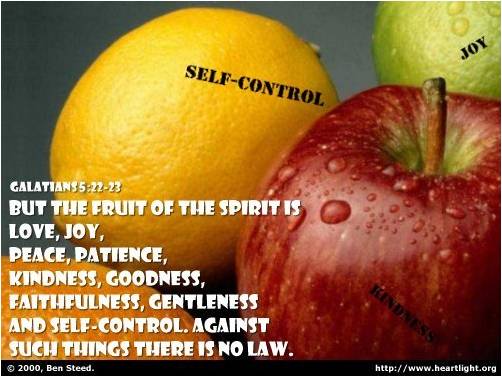
Fruit of the Holy Spirit (part 6): Goodness (Galatians 5:22-24)

Trask and Goodall start their chapter on Goodness in the Book ‘the fruit of the Holy Spirit’  by talking about the fuss that is made in the media when the Indonesian plant Bunga Bangkai flowers in botanical gardens round the world. Why so much fuss about this plant blooming? Well for one, It does not happen that often (about every ten years) and it is of course the world’s largest flower. It’s an impressive sight. The other reason it’s a big thing is the flowers smell… it is an impressive sight but that is over shadowed by its impressive smell or I should say stench. You see Bunga Bangkai is Indonesian for the corpse flower  and the bloom gives off the pungent smell of rotting flesh to attract carrion beetles to pollinate it, beetles that as their name suggests normally live on rotting flesh. Trask and Goodall suggest that often we can be impressed by the greatness of a person or a plant and not the goodness.  They might be rich or famous or gifted but they just don’t come up smelling of roses. 

It’s like the idea of sports people as role models. We may hold them up as people to emulate because they are good at something where as their behavior away from the field is not good at all. Not to be emulated.  Goodness Paul tells us is a fruit of the Holy Spirit that grows in a believer’s life and a faith community, as they walk with the Holy Spirit, that develops in our lives as we develop a deepening relationship with God. 

This of course does not mean that Christians have a monopoly on goodness and doing good things or we are not capable of evil. On  the cover of Johnny Cash’s 1994 album ‘American recordings’, which resurrected his career and earned him a Grammy award for record of the year,  Cash is portrayed as a cross between an ominous villain and a fiery old school preacher, standing between two dogs. In a Rollingstone interview he said the two dogs are called sin, and redemption the theme for this album. Cash says the black dog with white stripes, that’s sin, represents when he was bad, he was still capable of doing good, and the white dog with black stripes is a realization that while he is trying to do good he still does not always succeed. 

Of course what is Good is one of the hottest and longest debated points in philosophy and ethics. It is a small word but it can mean so much. What is morally Good, that’s a hot topic. What is aesthetically good (like this is a good cup of coffee and ironically with some people you can get such a good cup of coffee that it is wicked). The Greek word translated here does not give us much help either as it is a word that is unique to the Scriptures. But its root word Good is often used in the Septuagint the Greek translation of the Hebrew Scriptures as a word to describe God’s character. For Christians the idea of what is good, goodness, comes out of  the good God we meet in the good book.  And like the other fruit of the spirit we should not be surprised that this Christian virtue reflects God very nature. As even Jesus said ‘Only God is good”. 

What do we mean when we say God is good? Well 1 John 1:5 tells us that God is light that in God there is no shadow, no darkness…there is no dark side. God is holy and reveals his very nature to us, there is not just a nice bit of bait dangling before us that once we take it there is a hook. 

God, John goes on to tell us, is love, and in the story of God’s dealing with his people we can see the qualities of that love which makes God good. God’s love is towards all it is comprehensive: As Jesus says as the reason we should love our enemies, God makes the rain to fall on the righteous and the unrighteous and the sun to shine on the evil and good. Scripture also tells us that every good gift comes from God’s hand. 

 There is a consistency in God… God always reacts in the right way towards humanity and creation. I have to admit I’m grumpy in the morning, particularly before I have my first cup of coffee. As a diabetic I can have mood swings if my blood sugar is not right it means the way I act and react will change and may not always be right, but God is consistent in his dealing with humanity. It shows itself in his keeping his promises. Again in 1 John 1, John assures his readers that if we confess our sins… God will forgive our sins… why… the whole phrase is if we confess our sins God is faithful and just. God is consistent and dependable.

God’s love is constant: Another way of putting it is that God’s love is covenantal, the story of the Old Testament, the old covenant is God’s relationship with his people, based on promises and covenants God made with Israel. Firstly in genesis it shows that the Sinai covenant is a result of God’s promises to Israel’s ancestor’ s Abraham, Isaac and Jacob. Exodus shows us that it is based on God’s saving acts and compassion, leading Israel out of slavery in Egypt. The covenant itself gives the law where YHWH

The greatest way we see God’s goodness is in the sending of his son Jesus to live and to die.  God’s goodness is shown in grace and in sacrificial love… in the Cross. Again a gracious act of God to bring us out of slavery to sin and death that we might live as God’s people. To be a new creation, in relationship with him that in how we treat each other and those around us we might reflect God’s love and goodness. A new commandment says Jesus that I give to you… that you love one another as I have loved you. 

So goodness goes deeper than kindness which is the word it is often associated with, to talk about our very character, that there is wholesomeness and a purity about us that expresses itself in good deeds. There is a rightness in our lives that is reflected in us endeavoring to live in right relationship with God, with each other and the whole of creation. 

It does tend to be down played in our culture… terms like ‘a goodie two shoes’ or ‘
do gooder’ are used in a derogatory way. What about the phrase “O They think they are too good for us”, Jesus sets that on its head because his goodness was not an aloofness but a being with and alongside, the very opposite to the Pharisees who thought goodness meant excluding and separation. 

In the passage which contains the list of the fruit of the holy spirit, we see that Paul gives a list of behaviors that are destructive to a community and society, in contrast to that in verse 11 and 12 Paul had already outlined what constituted goodness to the Galatians he had said serve one another… love your neighbor as yourself: Sacrificial love. Goodness is translated in some versions as ‘generosity’ be gracious and generous to others. In chapter 6 of Galatians Paul goes on to talk about being good to others. He says being good manifests itself in how we rebuke and discipline people, how we react to wrongs committed by others. We should be gentle (verse1) and do it not out of an air of moral superiority but with an awareness that we too are fallen and tempted. In verse 3 he says that goodness is not self seeking but actually we should have a sober judgment of ourselves. We should carry our own load. He concludes his letter in verse10 and 11 by saying we should as we have opportunity do good to all people especially to the family of believers. There is a long Jewish tradition of good deeds which includes alms for the poor, taking care of widows and orphans, offering hospitality to strangers, but maybe Paul does not need to define it more because in doing so it might feed our legalistic tendencies to want such things defined and tied down and thus limit our goodness.

This hasn’t been very nuts and bolts how to be good, and express goodness message. It’s interesting that in Goodall and Trask’s book ‘the fruit of the Holy Spirit’ there was a tendency to focus on high moral standards as defined in sexual conduct and how we interact with entertainment and media. But I’m not sure that strict definition of goodness is helpful it possible represents where they are at rather than where Paul is at. It’s there when you see what Paul has to say about the work of the flesh, So we do need to take it into account, but if we focus on that we miss the wider understanding of Goodness being relational, as acting in a right way towards each other, that includes sexually, as well as the use of resources, whole heaps of ways. It’s interesting to note this fits in with what Paul says about the gifts of the Holy Spirit as well in 1 Corinthians 12, that they are for the common good. 

Trask and Goodall,  do however point us to ways the spirit can cultivate goodness in our lives. One of course is allowing our minds and character to be shaped and developed by reading the scripture, as Paul tells Timothy because the scriptures are God breathed they are good for teaching and correcting that we may be equipped for every good deed.  Also Paul tells us in Philippians’ 4: we should set our minds on what is good and honorable, what is pure and acceptable, if we focus on q diet of wholesome goodness for the soul as well as for the body (just a public health message there… Howard are you listening) then the spirit can use that to develop goodness as a fruit in our lives. 

The hope is that as we expose ourselves more and more to the presence and leading of the Holy Spirit that we might be caught up in and inspired and filled with the goodness and graciousness of God that the result in our lives in character and in actions will be that we and other will be presently surprised, giving glory to God, because …  well… surprise  “goodness, Gracious…me? Goodness gracious.. you. “Goodness, gracious… us.”

Monday, June 27, 2011

Jonah Beyond Our Boundaries To The Compassion Of God (part 4): Jonah chapter 4: Anger at God's Love.

When we lived in Napier as a family we’ve gone down to the fish hook festival that Ngati Kahungunu put on to mark Waitangi day, the kids really love the fireworks display. This year we got all-rugged up and went and sat on the Westshore side of the Ahuriri harbour to watch the fireworks. We got there early to get a good spot. It was hard waiting with the children because they were so excited about the possibility of this wonderful display. They were bouncing round and full of chatter. Then at 9 o’clock we watched the pyrotechnicians (if that’s what you call people who set off fireworks) flick the switch and  ‘boom’.  It was a great display full of noise and amazing colours, it even had that element of danger as one of the fireworks didn’t go the way it was supposed to it seemed to head straight towards us.

I wonder how we would have felt if the pyrotechnicians had come along at 9:00 O’clock and instead of flicking the switch had disconnected the wires leading out to the barge in the middle of the harbour. AS they were doing it over the public address system the message came. “We have changed our mind there won’t be any fireworks display tonight’. I know I’d be rather angry I mean we’d kept the kids up to watch it. The kids would be grumpy all the way home in the van. They’d advertised it, they probably got government funding for it. But I hadn’t paid to come along, I hadn’t earned the display by being a great citizen of New Zealand it wasn’t mine by right. It was a gift from Nagti Kahangunu. What right would I have of being angry? Trivial you might say?

Jonah had gone out of Nineveh and sat down to watch the fireworks, to be on hand when God destroyed the great city of Nineveh. It was a long wait forty days God had said and so Jonah sat out there and waited. But God changed his mind, he saw the reaction of the people of the great city and he heard their prayers and did not send any calamity.

Jonah’s reaction was that he got angry with God. He cries out to God ‘Right from the beginning he had resisted coming to Nineveh the capital city of his countries greatest enemy because he just knew that God is gracious quick to bless and slow to anger and that God would be consistent to his nature and show them mercy. Damn it. And he did. No fire and brimstone from heaven like with Sodom and Gomorrah, They would have deserved it God, no invading army no great dust storm from out of the south. No earthquake, flood or plague of frogs even, you could at least have sent an infestation of fleas or head lice but no. Only God’s compassion and grace and that makes Jonah so angry he wished he was dead.

God’s response to Jonah is ‘Jonah what right do you have to be angry?’ Lets face it God was only acting in a manner consistent with his very character. He was doing the very thing that makes him a good and righteous God. The way Jonah described God was a creed of Israel, a reason for praising God: “ God is slow to chide and quick to bless’. It echoed the very basis that Israel had for hope in the midst of their own disobedience. It’s pretty much word for word what the prophet Joel says in Joel 2:12-14.

Even now declares the Lord
Return to me with all your heart
With fasting and weeping and mourning

Rend your heart and not your garments
Return to the LORD your God
For he is  gracious and compassionate,
Slow to anger and abounding in love
And he relents from sending calamity.
Who knows he may relent
And leave behind a blessing

This was the character of God that Jonah had experienced with the whale and a second call to go to Nineveh.

If this chapter was a movie there may well be the sound of eerie music and then a wavering of the screen, the tell tale sign of heading into a flash back. Because the rest of the chapter seems to take place while Jonah is out in the desert waiting for God to destroy the city.

He sets up a little shelter and waits and sees what God would do. Now God causes a vine to grow up over his shelter and give him some respite from the sun. This may not seem such an amazing thing or us but in the desert heat of the near east again it was a sign that God cared for Jonah, he keeps him alive. Then God sends a worm to attack the plant just as he has sent the whale. Both great and small obey the LORD. The worm attacks the plant and as the sun comes up a scorching wind blows across the desert and the vine withers and dies. Jonah is left to the full force of a fierce and scorching desert day, the wind, the heat and the sun. Just to give you an idea of how harsh that can be,  in some Muslim countries the judicial system is lenient on people who commit crimes during the wind known as the sirocco because it is so fierce it can affect peoples behaviour and drive them to do crazy things. Jonah suffers the full extent of the elements. Perhaps a foretaste of what he had wished on his enemies.

Jonah is so angry at the demise of the vine he just wants to die. Maybe we can be angry at God grace. Why should Nineveh be saved and yet Israel your people be oppressed by them?  There are many reasons why we get angry at God. I mean God how could that person get better and this person die. How could innocent people and animals suffer and die at the hands of evil people and natural disasters. Come on God why do these things always happen to me, not that other person. The psalms and wisdom literature of the Old Testament are full of these cries of his people.

God asks Jonah why is he angry at the plant dying? Now on Wednesday morning before I first preached on this passage, a man I swim with told me that out his way there had been helicopters and wind machines going from the middle of the night. The winegrowers were furiously trying to save their grapes and fruit from an unseasonal frost that could have been disastrous to them. You could imagine they could quite rightly get upset. They had planted and tended the vines, invested time money and energy into this year’s crop and there is an unseasonal cold snap and it’s all gone. Maybe they would have the right to shake their fist at heaven. But as God says to Jonah he hadn’t cultivate this plant or weeded it or tended it he had simply benefited from the shade it provided. How could he be upset at its demise and so uncaring about the demise of a city? Yes it was the capital city of his enemies but there were well over one hundred thousand innocents in the city, how could he wish their demise and destruction. Not to mention many animals, animals whose only crime it seemed was that Assyrians owned them.  He had used the fate of the bush as an object lesson for Jonah. It is a challenge for us as well.

God’s compassion is big enough that it reaches out to all people.
How big is our compassion?

God’s compassion reaches out not only to Israel but to their enemies as well.

What boundaries do we place on our compassion? Are there racial boundaries? socio-economic boundaries? The boundary fence of a prison? The boundary fence of the gated communities that are growing around our suburb?  The boundary that it’s someone else while some of our people suffer.

God’s compassion was big enough for the great city.
How big is our compassion?

Right from the beginning of the book there is an ambiguity in how we are to view Nineveh. God’s initial concern for the city could have been that it was doing great evil, it was Israel’s enemy, or it could be that it was facing great trouble. It is seen as a great city, this can mean great size and population or reflect its prominence in the world order or it can have the meaning of being important to God.

Can we see God’s call to show his compassion to the whole city? Or are we content to think like Jonah did of that God’s care and compassion was limited to him as an individual or to his chosen people. I was shocked by an acquaintance who mentioned that God loved the local church and died for the local church and I had to recheck my theology and hear again that most commonly quoted but oft misheard verse John 3:16 for God so loved the world that he gave his only begotten son’. Perhaps we need to add and God loved it so much that he is sending out his loved local church into the city with his message to show and tell them of his love.

God’s compassion is big enough that he was willing to send his servant into that city.
How big is our compassion?

All the way through the book Jonah was very uncomfortable with what God had called him to do. He tried to run away. He sat down and waited for the end to come for Nineveh. But he went and did what God had told him to.

What comfort zones are we prepared to step out of even reluctantly so that the people of the city will hear, will respond and not only stop doing evil but will come into a relationship with God through Jesus Christ. I can’t help but think that the church can be like that shelter outside the city where we gather and wait for things to end.

God’s compassion was big enough to be extended to Jonah
How big is our compassion

God’s compassion and patience was shown to Jonah again and again, even in explaining things too him in the object lesson of the withered vine yet at the end of the book he is still the closed off, bigoted person that he was at the beginning. He knows God’s love and compassion he has experienced it again and again, it’s a gift… But at the end of the book he is still angry with God, angry that God is not like him.

How much are we moved and do we change as we experience the love and forgiveness of God through Jesus Christ.  You know there are many valid reasons to be angry at God. There are many valid reasons not to want to show compassion on other people. But the reality is that just as we have been shown God’s grace we need to be moved to be more like God. It’s not that God becomes more like us, sharing our likes and dislikes our biases rather we become more like his Son Jesus: That we show love to our enemies and to all people because that is what God is like. Can we step beyond our boundaries to the boundless compassion of God.  

Sunday, June 26, 2011

Faith is spelt R*I*S*K: and a quote from Theodore Rooservelt

There is a lot happening in my life at the moment. The chapel here at Auckland University is being renovated and its hard to concentrate amidst Ramset nails, buzz saws and other construction noises. The funding for the church plant I have been involved in is coming to an end (sadly without any other sources) and I am being forced to consider other options and possibilities for my life. There is a real sense of grief and questioning about what I could have done better. Amidst that I have also discovered the Auckland Public library  reserve system and have been requesting books I have wanted to read for a long time. One of those is 'In The Company Of Heroes', (2003, Bantam Press ) in which Micheal J Durant (with the help of Steven Hartov) tells his story of the shooting down of his Blackhawk Helicopter and his captivity and ordeal in Somali in 1993. It is a story of great courage and heroism and perseverance in the face of adversity. The book starts with a quote from Theodore Roosevelt that I found both inspiring and helpful as I wrestle with evaluating the last three years of my life. I share it with you.

"It is not the critic who counts, not the one whom points out how the strong man (person, to give the quote a 21st Century sensibility)  stumbled, or where the doer of deeds could have done better. The credit belongs to the man (person) who is actually in the arena; whose face is mari3ed by the dust and sweat and blood; who strives valiantly; who errs and comes up short again and again; who knows the great enthusiasms, the great devotion and spends himself (themselves) in a worthy cause; who at best, knows in the end the triumph of high achievement; and who, at worst if he fails, at least while daring greatly; so that his (their) place shall never be with those cold and timid soul who know neither victory or defeat."
-Theodore Roosevelt (Sorbonne, Paris April 23rd 1910)

I am always reminded of my New Testament lecturer at Bible College coming back from a John Wimber conference saying he felt inspired and challenged by Wimber's assertion that faith was spelt R*I*S*K (and I have heard it used in many other places as well since)and I have remembered that not just because I am an atrocious speller but because of its profound challenging truth. I hope I will continue to have faith, dream dreams and follow my saviour out into the arena.