Monday, October 1, 2012

Jesus economics... It's for the Birds? Matthew 6:19-34


I’m not sure you’d get a good hearing these days if you told people to consider birds and wild flowers as financial indicators. But when Jesus talks about economics in the Kingdom of heaven that is exactly what he does. He tells his disciples to consider the birds and the lilies of the field and that they will teach us about where to find financial security. The kind of security we need to put God’s kingdom first in our lives. It’s something that we desperately need to hear a fresh today.


 “The restoration of the church” says Deitrich Bonhoeffer ,“ will surely come from a new kind of community, which will have nothing in common with the old but a life of uncompromising adherence to the Sermon on the Mount in imitation of Christ. I believe the time has come to rally people together for this.”


Nowhere is that more relevant for the church and Christians in western culture than Jesus teaching on economic priorities in the second half of Matthew chapter 6.. Martin Luther sums up very well the challenge that we face, he said that where ever the gospel is preached two plagues arise against it, false teaching, that assaults right thinking and sir greed that assails right living.


There is a new urgency also to re-examine Jesus teaching on economics as we face the ever growing reality of the global village we live in. “The world’s population is mushrooming’ says John Stott,” and the economic problems of the nation’s become more complex, the rich are still getting richer, the poor poorer,’ a situation that God’s spirit will no longer allow us to turn a blind eye to.”  These problems are not just across the world anymore, they are part of our city and our neighbourhoods here and now. There is also the realisation that how we live is no longer sustainable ecologically.


At an even more basic level Jesus calls his followers to live differently than the world around them. When it came to spirituality it was to be different than the Pharisees that spiritual disciplines were about intimate trust not public performance. When it came to finances Jesus contrasts his way  to that of the gentiles whose focus was on their material goods and needs. When it comes to economics we live with that prevailing gentile worldview today. Our identity is primarily that of a consumer, we live in a consumer society… we are tutored says Rodney Clapp that people basically consist of unmet needs that can be appeased by commodified goods and experiences.’ That the consumer should think first and foremost about meeting their own needs. 


Jesus uses the metaphor of treasure, vision and slavery to call us to choose a different way to live.


Thanks to mysmartsignstore.com for giving permission for this image to be used. check out there store for all saftey sign needs.
It needs noting Jesus is not challenging us about providing for ourselves and family, he teaches us to pray ‘give us today our daily bread’. The scriptures affirm good stewardship and hard work. Nor is he denying that the world is full of good things to enjoy. But the question is where are the important things for us, what is our priority, what are investing our resources, time and energy into. What are we accumulating?


When it comes to accumulating treasure, why says Jesus would you spend all your time and money on things that will rust and rot and get stolen? We’ve been burgled four times in the four years we’ve lived where are now. I can attest to the fact that stuff gets taken.


Rather says Jesus invest in heavenly things. Things of eternal value, that can’t get taken away, that won’t rot that won’t rust or tarnish. There of course has been some debate on what Jesus means here.  What are treasures in heaven?


 Firstly heaven is where God lives and reigns now. It is not the idea of putting aside stuff for our ultimate retirement to glory, or so we can buy a better room in Our fathers house.


Secondly, It is not the idea of the church in the middle ages that there was an economy of merit, that the good things we did earned us brownie points for God that we could earn our salvation, or at least buy ourselves and our loved ones relief from purgatory. Jesus has already shown us that the Kingdom of God is a grace economy. Our suffering our merit doesn’t buy us in.


The clues to what this means comes from the Lord’s prayer, where we are invited to pray first and foremost, hallowed be thy name, thy kingdom come, thy will be done on earth as it is in heaven. That we invest in those things, we work on developing a godly character, we invest in relationships, we deal with the blot on the name of God that poverty and injustice is in this world, we get alongside the poor hungry and thirsty physically and spiritually and let them know and experience the good news of God’s grace. That we simplify our lives and lifestyle, to care for our neighbour. We realise we have what we have to share it with those in need.

Jesus then talks about our vision.  I remember hitching back from a friends place one night in the Waitakere rangers and I got picked up by an old guy in a Citroen DS21. As we drove through the dark windy scenic drive I began to wonder if I was going crazy. The headlights didn’t keep pointing straight ahead they swivelled and pointed where the steering wheel was turning. It was I discovered Citroën’s directional  headlights. It’s a great illustration of what Jesus is getting at when he talks about our bodies and lives going where we fix our eyes on, just as the headlights gave the impression of pointing the way the car was to go.  


There is that phrase people often use when it comes to shopping.. “I’ve had my eye on that for quite a while’. Right (whose said that) Adverts are made to be eye-catching. They bombard our senses with what we should buy. I was in a doctors waiting room and I found a magazine which had he byline ‘all about the good life’ the whole thing was about the most prestigious car to own the best jewellery to buy, the best fashion to wear the best luxury  holiday destination. It was full of ads that imagined the good life as being about these consumer goods. I found myself fascinated, fixated. Jesus reiterates his teaching on treasure by saying that our lives will go where our focus is. That can be on the things of this world or as the book of Hebrews encourage us running the race with our eyes fixed on the author and perfecter of our faith, Jesus Christ. When focused on that light can we really settle for the dark emptiness of things.


Then Jesus turns to say you can’t serve God and mammon (or wealth). Ronald Sine says that this generation of young people at University now are going the first generation since the second world war who will not have a better standard of living than their parents. They will not be able to afford to live in the kind of homes that they were brought up in.’ He goes on to say if they decide that that is their goal, it will consume all their time and energy simply to achieve it.’ They will have nothing left for anything else. Even the good Christian folk. That’s a good definition of serving the master of mammon. We are seeing that at the moment in our neighbourhoods, in many homes the need for both partners to work full time to service a mortgage, while paying off student loans. house prices spiralling upward. Sine suggests that the time has come for Churches to point to a new model for housing. Living simply, living communally. Sadly I fear that the church is unable to do that because we have for years been trying to prove Jesus  wrong trying to serve both God and money.


This is going to be contentious, but church buildings can be a good example of that. Winston Churchill said that you spend time shaping a building then you spend the rest of your life being shaped by the building. It’s easy for a community of faith to be caught in the dilemma of servicing a building or serving Christ. Buildings can be a great help to mission and equally a hindrance. Like with all matters of economics we need to keep asking what is our priority where is our treasure, who is the master we serve?


Now Jesus moves to show us a different way to live, the right place to invest and to find financial security.


He invites his followers to consider the sparrows that do not sow or reap but rather trust their heavenly father to feed them. It was great as I was wrestling with this passage this week to look out my window and see birds coming and getting a drink and having a bath in the bird bath in the garden outside my window. They show us says Jesus that we can trust our heavenly father who knows our needs even before we ask him. We are more important than sparrows to God and we can rap and sow, so we should not worry about those things. And says Jesus can anyone actually add another day to their lives by such worrying. In fact modern medical science tells us that anxiety and worry can do just the opposite.


Likewise says Jesus don’t worry about what you will wear, I mean consider the lillies and flowers in the field, they are here today and gone tomorrow but not even king Solomon looked so wonderful as they do. Trusting God enables us to have financial security that God cares and God provides. Yes Christians have responsibilities and need to work and will have troubles, Jesus tells his disciples that today has enough worries of it own, but by being prepared to trust God for our daily needs we have the freedom to focus on the god stuff; The important stuff, the eternal kingdom of God stuff. It enables us to focus on justice rather than just us, the concerns of others rather than our own comfort. To make decisions about what we need and what is really an unnecessary luxury.


Some people like St Francis of Assisi have taken Jesus literally in this and turned their backs on the society of his time, stripping off even the clothes of his rich merchant family to trust God and walking off naked to follow Jesus. We might think that radical and crazy but Francis ignited one of the most amazing revivals in church history. Thousands of people have followed him and committed their life to following Jesus and living a simple life caring for the poor, Franciscans can be seen in every nation round the world today serving Jesus.


Living simply and communally is growing round the world, there is a new monasticism people take that trust and priority in the kingdom of God to downsize and go and live in the harder neighbourhoods to be light and salt there. Others simply live simply so they can give sponsor children, develop a compassion budget and share what they have with other people. 


Jesus is short on nuts and bolts on this passage.  The call is for us to take Jesus seriously when he challenges about our priorities. Economics is where the rubber hits the road. In Luke’s gospel discipleship is measured by how deep it impacts on our pockets. More than anywhere else how we differentiate ourselves from our materialistic consumer society shows that we are not just living that lifestyle that Shane Claiborne calls , the western dream with Jesus sprinkles. 

Wednesday, September 26, 2012

God's wisdom, God's strength... healing words


For God's foolishness is wiser than human wisdom, and God's weakness is stronger than human strength. Consider your own call, brothers and sisters: not many of you were wise by human standards, not many were powerful, not many were of noble birth. But God chose what is foolish in the world to shame the wise; God chose what is weak in the world to shame the strong.
- 1 Corinthians 1:25-27

Once again I was struck by God's grace as I opened up my Sojourners verse and voice email devotion this morning.  I have what you might call a bipolar ego... it swings from the pits of feeling totally worthless and useless and moments of the height of pride and arrogance.  The verse for the day was 1 Corinthians 1:25-27 and it spoke healing words into my life.

New Zealand humour has a tendency to be self deprecating and one of my stock standard jokes on myself is that 'One of the sure signs that the Presbyterian Church is in trouble, is that they accepted me for the ministry... that's desperation'. Its not really putting myself down it's rather the lamenting that we don't have the (sorry to my colleagues here) top flight pick of the bunch people lining up to take on ministry and leadership, like we tell ourselves we used to in our idealised past.

However it is good to be reminded as I was today with 1 Corinthians 1:25-27 of the reality that it is God's calling and God's choosing (hmm you'd think with my reformed background that it would be hard not to focus on such things). While it is all about our calling to be God's people it spoke to me about calling to ministry... It is all about God's wisdom and God's strength, not mine. That's not a cop out that does not mean we don't work hard at upskilling and growing, but in the end there is a reliance on God's wisdom and God's strength...

Tuesday, September 25, 2012

Doxology

Don't often just flick up music vid's up on my blog... but really found myself enjoying and appreciating Micheal Gungor's music recently.

Love his rendition of 'Doxology' it take a well known tune and sacred song and makes it something new. Great guitar work as well.

'Praise God from whom all blessings flow'

Sunday, September 23, 2012

Trusting God With Our Failings and our Future... A Journey to the Heart of Prayer: exploring the Lord's Prayer (part 5)


Louie Zamperini  came seventh in the 5000 meters final  at the 1936 Olympic games …. Before the heats in the Olympics he had only run the distance four times, the fourth to qualify for the US Olympic team at 19 years of age. But the mile was his specialist event and while we will never know sports commentators suggest if it were not for the Second World War Zamperini would have been the first to break the four minute mile.

Zamperini’s life was changed by the war. He was a bombardier flying B-24 liberators in the pacific. In April 1942 his plane crashed in to the ocean and Zamperini and two others were the only survivors.  They were adrift for 48 days in shark infested waters, surviving off rain water and catching the occasional fish and seabird. After one of the three died they eventually washed up on a Japanese occupied Island and were taken prisoner.

 
 The island they were held on was called ‘annihilation island’ as no POW’s held on the Island survived except for Zamperini and his companion. Zamperini was famous and was considered of propaganda value. He was beaten, mistreated and starved and eventually shipped off to POW camps in Japan. Again he was mistreated and abused, beaten, starved, forced into slave labour. One Guard nick named the ‘Bird’ known for his sadistic cruelty took an instant dislike to Zamperini and made his life hell trying to break his will. Zamperini again survived.


He returned to the US after the war as a hero and began his life again, he met Cynthia Applewhite and they were married. He took up running, but an injury caused by a beating by the bird bought it to an end just as he was beginning to get back to some form. While to the outside world Zamperini looked like his life was together. His dreams were haunted by  the savage beatings he had received from the Bird. He was an alcoholic and his marriage was falling apart. Zamperini ‘s thoughts turned to  going back to Japan to kill the guards who had mistreated him so much. In desperation Cynthia convinced him to go to a Billy Graham tent crusade. Over two nights of struggle Zamperini finally encountered God. He went home and poured all his alcohol down the drain and from that time on never had another nightmare.


However he knew that he had to go back to Japan, not to kill his tormentors but to forgive them. In 1952 he did just that and was graciously allowed to address war criminals held in prison. He told them he forgave them. AS he looked out over the people there he was saddened to see that the Bird was not amongst them. The Bird had escaped capture and remained a fugitive till the Japanese pardoned all outstanding war criminals. Zamperini was invited to take part in the torch relay for the 1998 Winter Olympics in Nagano one of five Olympic torch relays he has been part of,  and hoped to meet the bird… Who at the last minute refused.  Zamperini wrote him a letter…

Which said… Well its best if we let Louie himself read this letter…


… Zamperini dedicated most of his life to his family and the Victory Boys Camp helping at risk boys and young men get sorted. today he is a vibrant 96 year old with an infectious faith.

 
His story is profound and such a great illustration of the last two petitions in the Lord’s Prayer. “forgive us our debts as we forgive our debtors’ and lead us not into to temptation, but deliver us from evil...to tell you the truth it’s such a great illustration that I have spent most of the week wrestling with how to move on from Zamperini’s story, how to explore these petition as they apply to our lives.  Mark Woodley is helpful when he confesses with totally honesty ‘It’s tough to make it through the day without at least one battle with failure, resentment or temptation.’  He goes on to say ‘By telling us to pray about these utterly human struggles Jesus walks with us in our daily lives.’


The Lord’s prayer starts with focusing us on God Our heavenly father. We say Hallowed be your name,Your Kingdom come, your will be done on earth as it is in heaven’ and as we turn to the second half the focus is on the process of making that a reality in how we live. Give us today our daily bread is a prayer of trust, it means that we are asking God to provide for our needs so that we can focus on the God stuff, as we’ll see as we move on in the Sermon on the Mount, when it comes to economics Jesus will say why worry about what you will eat and what you will wear, rather put first the Kingdom of God and his righteousness and these things will be added unto you. We can trust God with those things because Our Heavenly Father knows what we need even before we ask him.


Moving on we see that God is giving us a way to deal with the places and times  in our lives, community and world where God’s name is not hallowed, or where his will is not done. That firstly we can have those things forgiven, the slate whipped clean and secondly that God will protect us and guide us in times when we are tempted and attacked by evil.


 ‘Forgive us our debts as we forgive our debtors’ uses the metaphor of owing money to talk about sin and forgiveness, it’s one that Jesus often uses, it’s at the core of the parable of the ungrateful servant in Matthew 18 that we had read out to us this morning. It’s one I think we understand. We understand that there is a moral obligation to make amends for what we owe. There is also a consequence for not doing so. In the ancient near east it was imprisonment till you could pay or being sold into slavery to make amends. There were only two possible avenues for hope. The first was that the debt would be forgiven, Jesus tells us that we should ask God to forgive our debt, and the second was that you would be redeemed. A kind kinsman would come and pay your debt for you, would buy back your freedom. This also is a a metaphor of God’s grace, that in his death on the cross Christ paid the price, Christ is the kind kinsman who buys us free. To pray forgive us our debts is to be free from our failings and wrong in the past, free to live now in a manner that honours God’s name and expresses God’s reign and does God’s will.


But in this line from the Lord’s Prayer it seems like there is a catch, it seems like there is a clause, something in the small print, that our forgiveness is dependent on our forgiving others. In fact after the Lord’s Prayer Jesus seems to reinforce this in verse 16 and 17. It can look like we have to earn our forgiveness. Yes we are to forgive others but as a way of obtaining our forgiveness rather as an outworking of it.


 In the parable of the ungrateful servant, we are supposed to amazed by two things, firstly the generosity of the king for forgiving a personal debt of astronomical proportions, and secondly in light of being shown such an amazing amount of grace that the ungrateful servant should not even forgive his fellow servant the lazy twenty he borrowed the other week. John Stott puts it like this ‘ God’s forgiveness is not earned rather God only forgives the penitent and that one of the chief evidences of true penitence is the forgiving spirit’ NT Wright is even more succinct ‘the heart that forgives will be open to the forgiveness of God’.  Zamperini was so filled with grace at his life being restored that his heart was open to forgive the people who had subjected him to the worst of inhumanity.


 ‘Lead us not into temptation, but deliver us from evil’…

While I would like to think that this is a prayer that we would not face difficulties or suffering in life, that does not ring true. Scholars wrestle with the translation of this last petition, as it seems incongruous to think that God would lead us into temptation, as it says in the book of James, that when we are tempted we should not say God is tempting me. It has been translated lead us not to the time of trial but even that is problematic as again in James we are told that we should count it all joy when we face trials of all kinds, as it leads to perseverance which leads to a perfecting and maturing of our faith. And evil can be translated either just evil or the evil one. Rather this final petition is an placing of our future into Gods hands and grace. It is asking God to protect us and help us to not continue to live in ways that dishonour God’s name that run counter to his kingdom. In the good times abut also in the difficult and trying times. In both we look for Gods leading, guiding and protection.


Dietrich Bonhoeffer says that the church needs to rediscover the Psalms as Jesus prayer book and in his commentary on the Psalms Martin Luther says that the Lord’s Prayer is saturated in the psalms. In this petition we see the wonderful assurance of David in Psalm 23 ‘even thou I walk through the valley of death I will fear no evil, for thou art with me, your rod and your staff they comfort me’. We see the reorientation of the laments as the psalmists wrestle with times when  it seem that God has abandoned them and yet they come to a place of trust that God will lead and guide that God will preserve them even in the midst of their enemies. I took the service at Ed Hillary retirement village the other week and preached on Psalm 139 and this petition could easily be summed up with the positive ‘search me O God and see if there be any wicked way in me and lead me in the way everlasting’.


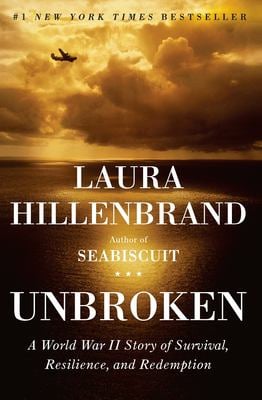
Recently, God’s surprised me in two ways… the first was by a library book jumping off the shelf at me. No it wasn’t an earthquake, it was through the prompting of a still small voice. The book was ‘Unbroken” by Laura Hillenbrand, I recommend it to everyone... and I’m sorry I’ve probably done a bit of a spoiler for you, because it is the story of Louie Zamperini. I wasn’t aware that he was a Christian; it just gripped me as a ripping yard of survival. But as I read it I became aware that at key moments in Louie’s story there were God moments, the pilot shot down with him was the son of a Methodist minister and would sing hymns on the life raft and lead Louie in prayers, a Christian guard on annihilation Island saved his life by protecting him and giving him an extra bit of food when he could. And I found myself crying at the way God reached into Louie’s life with grace through Billy Grahame and just the well spring of grace as he forgave his tormentors. ' I found it inspirational... Forgive us our debts as we forgive our debtors.


The second time was in my inbox through a regular devotion I get sent from sojourners; just a bible verse, a relevant quote and a prayer.  I’ve been preoccupied with my mortality. I know it seems a bit dramatic, but this blocked arteries thing has got me thinking about life and death. It’s been great how people have let me know that they are praying for me, and I’ve had people ring me up and even drop in and see me to reassure me that having stents in is a rather usual procedure these days. Even by passes are. And I’ve appreciated that encouragement.  But you know you still go through asking the big questions about life and worrying, I’ve even wondered if God was on the case. On Wednesday as I opened up my email devotion and realised that God was indeed at work… the bible passage was Romans 12:12… Rejoice in hope, be patient in suffering, persevere in prayer. The quote was from Dietrich Bonhoeffer.  It is a blessed thing to know that no power on earth, no temptation, no human frailty can dissolve what God holds together. ‘Lead us not into temptation but deliver us from evil.’

Friday, September 21, 2012

'Unbroken'

This book "unbroken" by Laura Hillenbrand found me. It jumped off the library shelves and said read me. I finished it with tears in my eyes at the amazing story Louie Zamperini is one of human resilience and the power of God's grace.  It's well worth a read.
 

Wednesday, September 19, 2012

A Heartening Bible Verse and Voice.

I must say there are times when I am surprised by the presence and the goodness of God. I'm on the waiting list for an operation to unblock arteries round my heart (In New Zealand we have a wonderful but full Public Health System) and to be honest it is rather unsettling.

To use a roading metaphor they have decided to repave my arteries rather than by pass, and it is thee days a very common and easy operation, done under a local anesthetic rather even! But I have found myself worried and anxious about stuff and asking myself questions about life... as you do.What  have I actually achieved in life and is what I devote time and energy to really worth it?

Back to the being surprised by God. Today I opened up my daily verse and voice email from Sojourners and encountered encouragement from two trusted sources. From  St Paul in his letter to the Romans... for me scripture is a very trusted source, and from Dietrich Bonhoeffer.

Rejoice in hope, be patient in suffering, persevere in prayer.
- Romans 12:12


It is a blessed thing to know that no power on earth, no temptation, no human frailty can dissolve what God holds together.

- Dietrich Bonhoeffer
 
 
While I'm not sure I'll be going as far as inking the verse on my skin (I'm a hairy old beast, and old, so it wouldn't look that good) but it is etched on my heart as a sign of God's love and care.
 

Tuesday, September 18, 2012

Waiting on the Lord in My Heart,Waiting Lists With My Heart

Why do you complain, Jacob?
Why do you say, Israel,
“My way is hidden from the Lord;
my cause is disregarded by my God”?
28 Do you not know?
Have you not heard?
The Lord is the everlasting God,
the Creator of the ends of the earth.
He will not grow tired or weary,
and his understanding no one can fathom.
29 He gives strength to the weary
and increases the power of the weak.
30 Even youths grow tired and weary,
and young men stumble and fall;
31 but those who hope in the Lord
will renew their strength.
They will soar on wings like eagles;
they will run and not grow weary,
they will walk and not be faint.

I have found myself  thinking of this passage more and more over recent weeks. At the beginning of the year I went to my doctor complaining about shortness of breath when I'm out exercising. It was starting to get embarrassing to have to ask a younger companion 'to stop for a few minutes so I could sort myself out'... at the same time I also changed job and moved from trying to plant a church amongst university students to a suburban church that was struggling to stay afloat... from the frying pan into the fire.

Well I started the new position with great enthusiasm, as in the midst of grieving the end of the church plant endeavour I felt that God had called us to St Peter's... Being a diabetic my doctor decided not to take any risks and put me on the waiting list for an appointment at the heart specialists... Being New Zealand we have a very good public health system. So last month I get an appointment and after being told that nothing looked wrong but they would put me on the treadmill test, I thought OK I've just let my fitness levels fall to much.

Six minutes into the treadmill test and the technician asks me if I'm having chest pains!!! No I say. The tread mill test is terminated I'm advised to lie down and there is a hurried call for the specialist. I'm put on the waiting list for an angiogram... He also put me on beta blockers!!!  in two weeks I get a call and I'm squeezed in because of  a cancellation. Seems I've got a blocked artery round my heart and two arteries with significant thinning... "I'm in the grey area," says the surgeon, "between needing a bypass and being able to be fixed by using stents". 

So at the moment I'm in a holding pattern they've told me they are going to put stents in... great... less intrusive, less down time... But I'm on the waiting list once again. I'm finding that between the plumbing blockages and the beta blockers that slows the heart down I'm exhausted at the end of the day... and I can't really go ask my doctor to take me off the meds so I can work longer hours. So I'm waiting (my in, non PC, joke at the moment to people who ask how I am is that they have decided to treat me using Chinese medicine... wai  ting list).

I love my family and I know they are concerned for me, it has been hard since they found out having to put up with them telling me that I should let them do more for me. I was told not to run a marathon and not to lift heavy weights.. and while I immediately cancelled my involvement in an Iron man and the Oceania power lifting championships (joke) I am having debates with my wife and kids over what constitutes too much exercise and too heavy a weight to lift. The scary thing is sometimes they are right... bother.

So Isaiah 40 is on my mind a lot these days, the realisation that in actual fact God is sovereign (my reformed tradition kicks in here) and it is God that I have to rely on day after day for my daily energy quota and also long term to work in my life through prayer and the wonderful yet full public health system here in NZ and the wonders of scientific break through .

I even accept the mild rebuke of being asked " do you think I'm not on the job, Carter?" (sorry NZ boys school system authority figures always use your last name). Long term its more lifestyle changes.