Monday, October 3, 2016

Prayer its communication with God... Honestly! (Psalm 5 Matthew 6:5-8)...Prayer nuts'n'bolts (part 1)


Over the past year at parish council we’ve been working through a strategic plan for our parish. Asking ourselves where do we want to be in five years’ time. Our vision is that we are called to be an authentic, vibrant sustainable Community, growing as followers of Jesus, and inspiring others to join us on that Journey’  and in our strategic plan we identified eight key areas that we believe are essential for us to focus on in order to see that vision fulfilled. One of them is Prayer… It makes sense that a healthy church would be based on its members having a healthy and growing relationship with God.  

AS Part of wanting to see our prayer life here grow in its vibrancy we decided to have a season of Prayer each year in October. Two years ago there was kind of a splash as we jumped in the deep end and set up a prayer room and asked people to commit themselves to coming and praying for one hour a week. There wasn’t much of an uptake.

 Last year we ran the Prayer Course a six week small group study on Prayer… good solid teaching on Prayer through input by video of Pete Greig, the founder of the 24/7 prayer movement and also group discussion and we had twelve people do the course.  And we backed it up with teaching in our services looking at the Lord’s Prayer. 

This year its good that the prayer chain has grown and that a group of people from the prayer chain now get together for encouragement and prayer each Monday morning. If you have situations and people that you are on your heart the prayer chain is a great place to get people to partner with you in bringing them before God. Deb’s contact details are on the back of our newssheet each week. Earlier this year I also challenged you to each pray for five non-Christian friends, neighbours or family members to come to Christ. To remember them by light bulb and light shade you can carry in your wallet or purse. The good thing was that as it came from an Anglican initiative there were some written prayers to help us do that. There are still some of those in the Church foyer.  (if you are readinfg this online just follow the link).

This year as the parish council thought about ‘the season of prayer’ it came up that we should focus on the nuts and bolts of Prayer. It’s very easy to encourage people to develop their prayer lives but what about some good practical teaching on Prayer and Prayer practises. Sort of a Prayer 101. It’s interesting that Prayer is the only thing we know about that Jesus disciples asked him to teach them about, In Luke’s gospel it leads to what we know as the Lord’s Prayer. So over the next few weeks we are going to look at prayer. We are going to use Jesus teaching on Prayer and that wonderful prayer book in the scriptures in the Psalms to help us understand the basics of Prayer. Now some of the nuts and bolts we’ll use are very practical and some of them are theological.

I guess a good place to start is that at its most basic level Prayer is communication and conversation with God.  You’d think that was one of the most basic and easy things for us to do right? But actually communication is an art. Right! In the film ‘the end of violence’ the opening scene is of the main character a big time film director working out by the pool and he has every communication gadget possible with him: His laptop, a mobile phone, a cordless phone connected to his landline in the house, Internet access via Wi-Fi… he is on a video call on the laptop with his secretary and making calls to financiers in japan over his mobile… and then in the midst of all this  his wife calls him on the landline from the bed room of the house to tell him she’ leaving him , because they no longer connect and communicate. It's ironic but the art of conversation and really making a connection is under threat in our communications mad world. In the Marriage course one of the sessions is actually committed to how to have a conversation. How to talk on a level where we can share intimacy, work through issues, share like we do in prayer things that are at a deep and important level...Heart to Heart.

WE also don’t often know what to say to important people when we meet them. Like the queen, people are actually informed how to communicate when they meet her majesty. One night we’d gone for pizza and into the shop walked the Jonah Lomu, the late great rugby player. I wanted to say something to him, because I appreciated and admired his play, but I just knew it would come across wrong, or I’d say something stupid, or embarrassing. So I didn’t say anything. We just laughed with Jonah when the guy behind the counter didn’t know who he was and asked him for his name and then how to spell it. I guess it’s like that with God what do you say to the one who created it all?

It doesn’t help when we are used to prayer being couched in religious language. When I was growing up there were people who would drop into King James English when they prayed, they’d been bought up on it. They’d talk normally but when they prayed out loud, all these ‘thee’s’ and ‘thou’s’ would come out, they would dust off their doest and nearly every second word would have a –th on the end of it-th. Or you find people who when they pray this spontaneous energy come out and they just want to just say the first thing that just comes into their head and its often punctuated by repetition of  father, father or lord, lord… or both father, Father,  Lord, father. Sometimes the Psalms don’t help us here because they themselves are written as Jewish poetry, and they are full of vivid metaphors and word pictures, that and have a structure that for us as English speakers is unnatural. It one way it is helpful because poetry is the language of the human heart. But in another way it’s not that helpful, because we may not be like David who was a poet and a lyricist, and the other people were professional liturgists.

How then are we to speak to God? How do we pray?

In the first two verses of Psalm 5 there are three different words that David uses for Prayer. The first is ‘words’ He asks God to listen to his words. There is a sense of Prayer being spoken communication with God. For David as a gifted poet and musician it was natural that his communication with God would reflect that. He’s Jewish and so it’s natural that his words would reflect that cultural way of speaking, expressing the same idea in two different ways in different lines and that sort of stuff. It says that Prayer is the speech that is just natural for us.

The second word is lament; a lament is the Jewish blues. Note that David does not ask God to hear that but to consider it. In fact the word for lament here has the idea of mumbling under ones breath. A mumbled prayer, a sigh… David is in a bad situation, in fact one possibility for this prayer is that comes from when David has been exiles by his son Absalom and is fleeing into the wilderness. He’s unset and distressed and maybe his words are not clear it’s just an expression of what is going on inside. I’m finding myself getting more and more frustrated with technology that is supposed to make my life easier but doesn’t and I’ll often let out a frustrated grunt, and my kids pick that up and will lovingly come and ask me what’s wrong and if they can help. It’s a male ego thing but I’m often too embarrassed to let them. In the New Testament in Romans 8:26 Paul says the Holy Spirit helps us to pray in our weakness in groans and sighs too deep for words. God hears that kind of prayer.

The last word is ‘Cry out’, David Cries out to the Lord and you get the feeling that this is a in the car by yourself things are not going well no one’s around so I’m going to let it all out shout. God hears that hurt and that pain and need. In fact when you work through the psalms you see people bringing their trouble, their anger, their hate, doubts before God as well as their praise and trust and admiration.

So prayer doesn’t need to be articulate and polished and full of words and phrases that can captivate a crowd and sour to the ceiling of the grandest cathedral. They have to be real, honest and true to whom we are.

In the New Testament reading we had Jesus points out two things that genuine Christian prayer should not be like. He says it should not be like the Pharisees who love to get attention as they pray in public. It’s not for show, it’s not a put on mask of to show others our piety… it’s to be honest to God being honest to God. Its best done in private. Like in a marriage the best way to build up that marriage is to spend time with each other talking with each other. The other thing Jesus says is that it doesn’t have to be like pagans, who think that by all there, words they can convince their idols and gods to do their bidding. It’s not the volume, the amount or the volume, the loudness of our prayers that matter but who we pray to… Jesus say God already knows what we need… of course he goes on to give people the Lord’s Prayer as a way of helping us priorities our conversation with God. Next week we are going to have a look at the content of prayers.
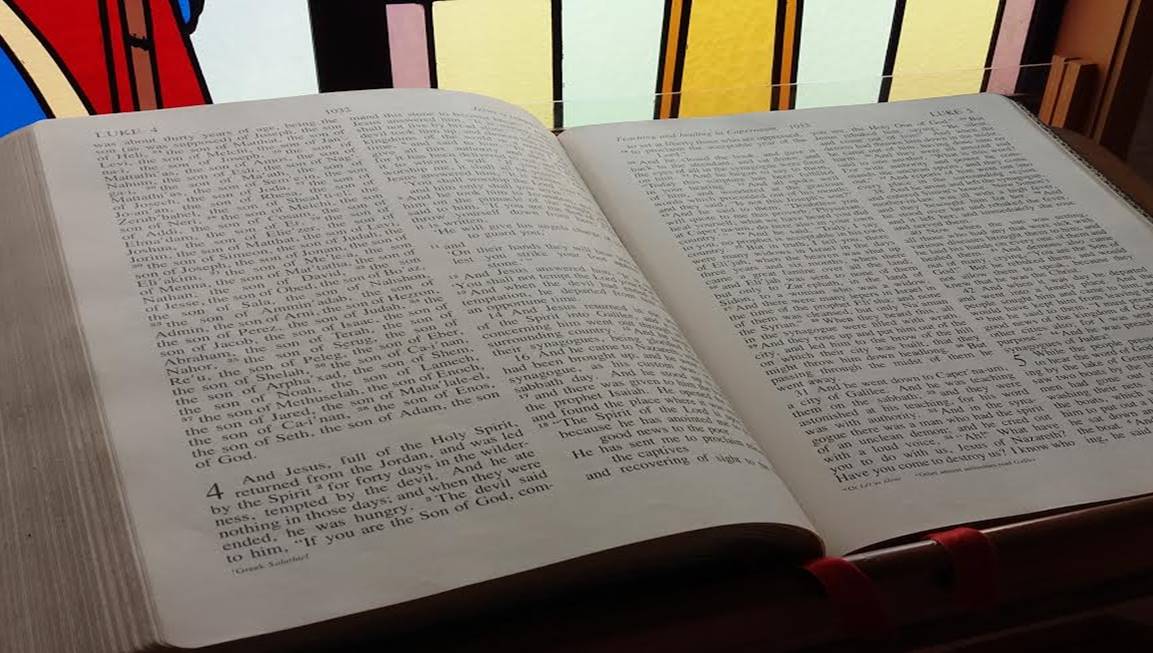
This leads on nicely to what Eugene Peterson says about prayer that’s very helpful. He says Prayer is answering speech to God. It’s our response to God speaking to us> God always initiates the conversation. In Psalm five that we read today, David can come to God for help, because of what he knows of God’s nature, how God has revealed himself. In this case it’s God’s Holiness. That God is incompatible with evil, he can’t give wrongdoing and injustice a sly wink’ and let it happen. But also the unrelenting goodness of God, that God cares for his people, a goodness ultimately shown to us in Jesus’ death on the cross.  The sure sign that God wants to communicat with us is the incarnation where God laid aside all the trappings of divinity to be with us and talk with us. With assured confidence in that David can come to God asking for help. Prayer is our response to God’s revelation of himself, on a practical level its why Bible reading is an important element of Christian devotions it allows God to initiate the conversation.

Ok. Once there was a man who came to his pastor to tell him that he had real trouble praying because he couldn’t image that God was there. The pastor thought for a while and suggested that he might want to simply sit down with an empty chair and imagine that Jesus was there sitting in that chair and simply talk. The man thought it was a bit strange but he said he’d give it a go. Many years later when the man was dying he called the pastor to his bedside. The pastor came in and went to sit down. But the man cried out ‘wait’ doesn’t sit there that’s where Jesus is sitting. It wasn’t that he suddenly had an imaginary friend but that his prayer life had been improved and he had developed such a deep intimate connection with Jesus that it was real for him.  A busy man of God was often asked how did he find time to spend alone with God and his reply was well when you leave I’ll be alone with God. This week I want you to practise the presence of God. Take ten minutes  at the end of each day, maybe as you’re going for a walk, or have a cuppa tea before bed and just imagine that Jesus is right there with you, which of course he is and take time just to talk as you would to a close friend. Maybe work through the day and thank Jesus for the things that have happened where you’ve seen God’s hand, tell him say sorry for the things you know you’ve done wrong, give him the things that are worrying you. Have a conversation.

Monday, September 26, 2016

Genesis 1 Reflections on the Creator, Creation and Us (part 3)... and us. (Genesis 1:26-2:3, Romans 8:18-25)


The second car I ever owned was a white 1968 Rover 2000. Lloyd George the great white whale I used to call it… and really if it was a whale it would probably be that most kiwi of cartoon whales and be ‘beached as bro”. Really it should have had another name… lemon… not because I painted it pastel yellow but because it sucked as a car… it was always breaking down…. I took it out to Piha one night and it broke down on the way back, in fact it did it several times, this before cell phones so I left it to walk home and get help. When we came back it had the window smashed and the stereo was gone. I took a girl out on a date, and it broke down, and no it wasn’t one of those excuses you give to the girl’s parents for having her home late… it broke down… fortunately outside a mates house so I was able to borrow a car to get my date home on time… The car spent as much time parked up on the lawn waiting for repairs as it did on the road.

Anyway I created a story for this car. I decided that probably it was the last car off the assembly line on a Friday afternoon. Probably during industrial unrest in the factory, where the workers were upset and contemplating industrial action, industrial sabotage. It was   definitely after the workers had been out for a liquid lunch or had their Christmas party and they were racing to get it finished so they could head off for the weekend or the Christmas break.  It was slap dash… it will do… last minute… no good… a real lemon… and even worse by the time I got it, third or fourth hand. In fact at the end of it sitting unused for several years while I was a poor Bible College student I gave it away to a mechanic who at least could do the work on it himself.

However as we’ve looked at the Genesis creation narrative we see that … God never created a lemon… well he did… those wonderful tangy sour fruit that help provide Zest and zing with the flavour they bring… maybe I should get a job writing jingles… God does not make junk. God did not suffer from Friday afternoon brain fade. As the high point of the creation narrative on Friday after lunch it tells us that God created human beings, male and female and made them in his image. There was something unique and special about us. He blessed humanity to be fruitful and gave them a purpose in connection with the rest of his creation.

Over the past three weeks we’ve been reflecting on the creation narrative in Genesis 1 and what it has to say about the Creator, creation and us. We’ve seen that genesis 1 speaks of the eternal nature of God, in the beginning God, that God created all there is, that God is sovereign and not only spoke and it came into being but is actively involved in an ongoing basis with his creation: This narrative is viewed by its writer from the perspective of this Creator God being in relationship with his people, We view the creation narrative as the pointy end of the story of God which leads and finds it fulfillment in Jesus Christ. WE saw that Genesis 1 speaks of creation, as being temporal and physical, subject to time and space, That God provided for all his creatures and established habitats for them and that God created it good, It is valuable precious, in fact the wonder and marvel of creation is a form of worship and praise to God.   Today we are going to look at what it has to say about us and in particular look at what it has to say about creation care as part of our Christian faith and discipleship.

Genesis 1 tells us that human beings are made in the image of God. What constitutes that image has been a matter of much conjecture. People have seen it in our ability to reason, in particular our ethical reasoning, our ability to love, to create, some commentators note that for the early Jewish writers they didn’t philosophically differentiate between the more spiritual aspects of humanity and the physical, there is something about the whole of us that reflects God. Others focus on the fact that we were made in God’s image male and female, note the equality of God’s plans, that it has to do with our ability to love and have relationship, that enables us to have a relationship with God, to know God and enjoy him always as the shorter Westminster catechism says is the chief end of humanity.

In Daniel Quinn’s novel ‘Ishmael’, which is an attempt to address the ecological problems we face,  Ishmael, a wise old talking gorilla, hey it’s a novel, challenges his human protégée’s perspective that humanity is the centre of creation by telling him the creation story from the perspective of a cockroach…(I think as it’s been a long time since I’ve read it).. where the created order finishes with the cockroach. It sees itself as the high point of all that is made… the very pinnacle of the evolutionary process… and sees that the world is then theirs to do with as they will… That is why they seem to think they have the right to turn up in your cupboards. It was designed as a critique of the Genesis narrative and its focus on humanity.

B
ut that is a miss reading of what Genesis has to say about us. Yes humanity does come last in the created order, and yes Genesis tells us that we were made for a special relationship with God. However, as  a rabbi in Leon Uris’ novel ‘Mila 18’ about the Warsaw ghetto says ‘We were created last to give us humility, as we remember that even the flea and the tick came before us in the order of creation’. It says that the created order was there before us and was made good. It says that we are part of and connected with all creation. It is a miss reading of the Genesis narrative also because creation does not finish as the sun goes down on Friday night, remember for the Jews a day starts and finishes at sunset. The high point of creation is the Sabbath, when God rested.

The writer of the genesis narrative is identified by scholars as having a priestly liturgical understanding of creation, which focuses on the Sabbath as the high point of creation, where God rested from his work. The high point of creation is that we are designed for relationship with God. You could say the creation narrative starts with God and finishes with God as its central focal point.

Now one of the things people wrestle with when they come to Genesis  is a seven day literal creation. If you’re a doctor who fan you’d probably call it ‘the timey-whimy thing’. Again the writers focus is not on the mechanics of creation, and I simply have to say I don’t know… It is mentioned elsewhere in scripture in the Ten Commandments in Exodus 21, not as a scientific fact but as the basis for the people of Israel having a day off. We forget for a slave population this was revolutionary, this is the start of labour law reforms. Something we need to remember and recapture in the face of  the encroaching tyranny of our 24-7-365 world. Elsewhere is scripture in the Psalms and Job and in John, the scripture writers can speak of God’s creation without clinging to the literal week of creation. John’s emphasis is on Jesus as the eternal creating word of God. But that seven day narrative does point us to that relationship with God, the worship of God as creations highpoint and purpose.

The creation narrative also speaks of God giving humanity sovereignty over creation. I fear that has been misunderstood as well. It says that we were to subdue the earth and rule over it. People have seen this as a God given right for us to do what we want with creation, to exploit it and use it for our benefit. They forget the historical political background to this passage. All through the Genesis story God has been seen as sovereign, like the kings of the Medes and the Persians, he speaks and it comes into being. In giving us dominion over creation it is not giving us autonomy, but rather to serve God as a lesser king might serve a greater king. To rule in a way that reflects the ethics and purposes of that greater king. In New Zealand we have a good understanding of this, in the news over the last month we’ve being saying good bye to our governor general Sir Jerry Mateparae and this week we are appointing a new one dame Patsy Reddy.  They are the representative in our country of the head of state, the queen. They are not able to do what they want, they must reflect the values and desires of Her Majesty. That is the same here… we are invited to be God’s vice-regents. This means we treat and care for creation because it is our Lord’s possession and we reflect his values and purposes. In the other creation narrative in Genesis two you see that authority manifested in God bring us all the animals to name.

The problem is that as we see as the story of our origins in Genesis moves on is that relationship with God is broken. Humanity sins and as a result of that the whole of creation is affected. The image if God in us is marred, we find instead of a peaceful coexistence with creation trusting in God’s providence that humanity and nature find themselves at loggerheads. We have to work hard to grow food, we have to contend with weeds, our relationship with each other is also broken; Adam blames Eve, Cain kills Able it escalates from that.

Creation care and the restoration of creation becomes part of God’s plan and purpose to restore right relationship. AS we saw in our New Testament reading today from Romans 8: that creation groans in the pain of childbirth as it awaits the children of God to be revealed. The restoration and renewal of creation really looks for the restoration of that relationship with God. It is a gospel matter. In the early 1970’s there was the first inklings of ecological crisis and in trying to address it a collection of world leaders called the club of Rome coined the term problematix, that the ecological crisis was a matrix of interlocking problems. One of the issues they saw was that few people were able to look forward and beyond the here and now and their own sphere of living, that to solve the problematrix needed people who could do that. The gospel actually gives us the ability to do that. To see God active through history, and moving towards a conclusion, not that it’s a ticket out of here when it gets to messed up, but that see we are here for the good of people beyond ourselves.  That God wants to reconcile all things to himself.

 Gus Speth, who helped found the Natural resource defence council and was dean of the Yale school of forestry and environmental studies agrees with that, he said this on a BBC radio interview.

“ I used to think that top global environmental problems were biodiversity loss, ecosystem collapse, and climate change. I thought that with 30 years of good science we could address these problems, but I was wrong. The top environmental problems are selfishness, greed, and apathy, and to deal with these we need a spiritual and cultural transformation. And we scientists don’t know how to do that.”

The Christian faith is able to tackle those issues. But to do it we need to find ourselves seeing creation care as part of our discipleship. That life transformation includes that. Sadly we have become rather enslaved to our western materialistic life style. Our imaginations are informed by our western world, our aspirations and expectations reflect not gospel values but our society’s values. Sadly like the rest of our culture we are addicted to our excess… and we need to repent. One of the ways that the scriptures talk of that restored relationship with God is the word shalom ‘peace’ finding wholeness. Sadly that word has been hijacked by billy graham in his little book ‘steps to peace with God which focuses on a making a decision to follow Jesus, and does not go the whole way of seeing the word as being… In right relationship… yes with God… but also with the spiritual realm… with each other… with the created order… with our material possessions. At its most vibrant the Christian faith has been lived counter culturally, you can see it in the Celtic monks connection with the natural world, st Francis of Assisi, much of the urban monastic movement, with a focus on simple living and closeness with creation. William Wilberforce’s faith lead him to not only lead the move for the abolition of slavery but to set up the RSPCA as well, to care for animals.

Here are some thoughts about what it means practically.  It means recycling and all that stuff we are encouraged to do. The church needs to have a voice in the ecological debate… Pope Francis’s papal paper on creation is a completing step in that direction. We need to put our money where our mouth is. Luke’s gospel says the depth of faith is shown in how deep it impacts our pockets. It was good to see at the last PCANZ general assembly that our denomination voted to divest itself of any investment in the petrochemical industry.  I’m not a great gardener but it is good to see churches make commitments to growing food locally. One of the ways we can serve our community is to make the time to clean up parks and streets. Some churches meet together on a Sunday to do just that and then have a meal together and worship afterwards, they invite the community to join them. Eco-missionary work will be a growing trend in the future as Christians are prepared to go to the places and people most affected by pollution and climate change and be part of caring for those affected and changing things. Dorothy Brockets son Garry is a pioneer in that with his biofuel projects in Bangladesh. Using technology to help with recycling and resolve poverty and sharing the gospel as you do it.

You know the world is not a 1968 rover 2000… it’s not a lemon starting to break down all the time, it is a precious gift given to us by its creator, who invites us as part of being his family through Jesus Christ, to care for it and its people. Let me finish with the words of Columnist Paul Harris… “there are many Christians around the world who are deeply engaged in caring for creation. But we are still just beginning. Our worship and work and witness will be incomplete until our responsibility to conserve the glorious God-given diversity of earth’s creatures (and their and our habitat) becomes second nature.”

Wednesday, September 21, 2016

cosmos sunday a prayer of thanksgiving


while the stars may not influence our lives in New Zealand we find ourselves knowing our place in the world when we look up and see the southern cross. It fixes us as a southern hemisphere nation, it is the symbol on our flag. For me it is part of the night sky's silent witness as the pointer point towards the cross and Christ.
The Season of Creation finishes this sunday with an invitation to give God thanks for the cosmos, the wonders of the heavens that Psalm 19 tells us declares God's splendour. It is an invitation to look up, wonder and worship... from clouds to invisible yet so essential atmosphere layers through our solar system and its orbiting objects and out into our galaxy home and beyond... And I've used Hubble's deep feilds as a way of expressing that most distant of horizons which we have not yet learned to look beyond.

But Psalm 19 also calls us to know of God through special revelation for the psalmist the law and for us the law fufilled in Jesus Christ. So the universe witnesses to God's greatness and the law his goodness.

Once again I offer these words for people... feel free to use them or any part or line or phrase that helps you in your worship and prasie of God. feel free not to. The other two prayers in this season are flora and fauna sunday and storm sunday... follow the links.


Lord who spoke and it all came into being

We give you thanks for the wonders you have made.


As we’ve looked around us this month we’ve said thank you for

The dark unseen depths and coastal shallows of the ocean

The beauty and diversity of this Island home of ours

Still lake and rushing river, Majestic Mountain and sheltered valley

Wondrous plants, delicate wild flowers to soaring forest giants

Plants that we grow and tend for food

Plants that grace and nurture the great diversity of natural habitat

Animal life from irritating tiny insects to grand majestic whale

Soaring birds, crawling and slithering reptiles, crustacean and fish

Domestic animals and wild free roaming beasts

Ourselves, each in our uniqueness made in your image


Lord who spoke and it all came into being

We give you thanks for the wonders you have made.


Now we look up and outwards and we see your splendour

Friendly white summer clouds and grim daunting storm front

Layers of atmosphere, enabling life, protecting and sheltering,

The silver of asteroid burn and rarely seen streak of comet tail

The moon, reflecting light into our darkness and ruling the tides

The sun, giving us light and warmth anchoring us in space

The mysterious variety and splendour of close planet neighbours

The brush stroke of our galaxy its vastness arching across the night

Nebula cloud, quasar and pulsar, black hole and red giant

Numerous galaxy swirls that reach us as simple bright dots

Hubble’s deep field that marks the extent of our seeing and knowing


Lord who spoke and it all came into being

We give you thanks for the wonders you have made.


We thank you for how the heavens speak in silent witness

Seeing them we catch a glimpse of the eternal

We become aware of how awesome is our God

You spoke and they came into being, you know each by name

We are aware of the seasons, time passing and things changing

Enabling your providence and focusing us on what you have done

we thank you that you are not silent or distant, beyond our knowing

That you have chosen to speak through the law and the prophets  

That from beyond space and time you’re creating word became flesh

That in Jesus it dwelt with us, and we beheld your grace and truth

In his death and resurrection we have become new creation


Lord who spoke and it all came into being

We give you thanks for the wonders you have made.


We look within and see our need for your light and word

We are aware that often we have shut out the witness of the night sky

We have let neon flare and street light glare focus us only on our selves

We have shut out the radiant light of your love and gone our own way

We have revelled in unloving dark, polluted and exploited creations gift

Heavenly father we pray you would forgive us and wipe the slate clean

We thank you that because of Christs great love that we are forgiven

Fill us afresh with your Holy Spirit, replace the night with your new day

Enable us to join our words and deeds to the night skies silent witness

That in all we say and do, we may point people to the true light, Jesus

Help us to love one another and care for your creation, to your glory.

Monday, September 19, 2016

Genesis 1... The Creator, Creation and Us (part 2)... reflections on what Genesis 1 tell tells us about the created world.


When we come to the creation narrative at the beginning of Genesis we find ourselves at the pointy end of the story. The pointy end of that supposed clash between science and faith. We can’t read Genesis 1 today without the questions and doubts and alternatives expounded by science coming to the fore in our minds. It raises the question how do we read it? How do we hold it together? Is it true?…

Jeremy England  an assistant Professor of Physics at MIT (that’s the Massachusetts Institute of Technology not the Manukau Institute of Technology) is working on some very radical theories of the origins of life…Theories on a molecular chemical level which leaves my limited grey matter  bubbling away like a Rotorua boiling Mud pool. England is also an orthodox Jew and is often questioned about how he holds the two things together; and so his reflections on this matter are helpful for us…

Firstly he comments on the nature of scripture. He says that ‘the Torah, that’s the first five books of the Old Testament, is not troves of scientific treasures to be mined as such. That would be a foolish way to read the Torah, and would make him a bad scientist.”

However he goes so far as to say that living with the faith science tension makes him a better scientist.

 “When you encounter a contradiction or something that seems really difficult and you’re forced to work very hard to resolve it, without simply getting to ignore or reject one side of the contradiction, it’s very productive.”

The creation narrative at the beginning of Genesis is at the pointy end of the story in another way. There is nothing before it, if the bible were New Zealand we would find ourselves at Cape Reinga, that northern most tip, steering off into the vast pacific our view going only as far as the horizon. It’s not a horizon constructed of myths but shrouded in mist, mist that we cannot look beyond. It leaves us with unanswered questions, as it starts with the affirmation that God created the heavens and the earth. Then we have the particulars of how that shapeless void becomes life as we know it.  We are left with questions of time scales, what was before, where angels fit and Satan’s fall may fit into it, even the very eternal existence of God. Augustine of Hippo, from the 5th century would jokingly reply, to students who would pester him about what God was doing before the creation, by saying he ‘was preparing a hell for those who were too curious’. John Calvin, the father of our reformed faith in the 15th Century, enjoyed that Joke but standing at that pointy end summed it up by saying “I do not know, what I do not know.”

And while Genesis One is the pointy end of the story, a place where all of humanity can stare off into the eternal, it does have a lot to say to us today if we will let it speak. There is a beacon of light, like the light house at Cape Reinga for us.  It has a lot to say to us about the Creator, about Creation and about us, both our relationship to the creator and to the rest of creation. It has a lot of timely and significant things to say as we face ecological crisis.  

Last week we saw that the writer of this creation narrative wanted to tell us some important things about God. That God is eternal that the story starts with God. That God made all that there is, It wasn’t made by accident or chance, it didn’t come from conflict or the incessant wildness and clash of chaos, but was made in an orderly manner with care and craftsmanship, it was made good, and it was made with purpose. The writers concerns were not with the origin of life so much as the story of God’s relationship with his people. Creation wasn’t an isolate act of a distant disinterested deity rather the creator God is also the God of Israel, and as we from beyond the cross and the resurrection can see is the God who stepped into our world and invites us to become new creation in relationship with the Creator as our heavenly father through Jesus Christ. Genesis one is the pointy end of that story of God’s love and grace. A couple of weeks ago we looked at Psalm 136 with its incessant repetition of the phrase “God’s love endures for ever” and the Psalm starts with the creation saying that it was the start of the enduring faithful love of God. This week we are going to look at what it has to say about creation, the things that God made.

When you read through the Genesis narrative you see that it is a comprehensive list of things that God made. The Genesis story actually reflects the cosmology of its day that the world was created in a dome, a firmament between the waters above, where we get the rain and the blue colour of the sky and the waters below for the ancient writer, the impenetrable ocean depth. In the film The Turman Show which is full of reflections on Humanity and our relationship with our creator, the vast   studio that the shows director and creator Christoff creates for Turman reflects that. The sun and the moon and the stars are seen in the genesis narrative as travelling on that dome, that firmament.  While the cosmology may not stand up to our understanding of the vastness of space, we tend to think of that firmament as a poetic construction of the various layers of our atmossphere, but it still has a lot to tell us about the created world.

The first thing God creates is light. It’s important because it is by light that we are able to see and make sense of the world. In 1 john 1: John tells us that God is light, and creation is first and foremost part of God’s revelation of God’s self. While we may not be able to make sense of light without associating it to sun and moon and stars, here the write of genesis is poetically asserting that time itself is a created thing. Part of our created-ness is that we exist both in time and in space. It separates us from the eternal nature of God, unlike God creation it and we has a beginning and an end, whether we like it or not we are all subject to time. Bethany is doing Biology at University at the moment and came home with an interesting fact that they have discovered a tree that is so old that it is literally dying of old age, it can no longer regenerate and replicate its cells, until that discovery they didn’t realize that there was a limit to how long a tree could exist. In scripture the fleeting nature of human beings is affirmed, using the metaphor of grass and flowers, and part of the amazing reality of God is that this eternal being still cares for us. We also want to try and quantify God’s eternal nature in relationship with time, but it might sound very sci-fi-ish but God exists outside the space time continuum, he is not affected or changed by time. God is not waried by the passing of the years. God is not worn down like seashore rocks by the incesant pounding of ocean waves, God is not distracted or attracted and influenced by this trend or that novelty.

Another part of what Genesis says about creation is very consistent with what believe in modern science, that is that all things we see in creation are simply that created beings, physical in nature. The creation narratives come from the context of the cosmology and theology of the world in which they were written. If it is during or after the exile they are written against the background of nature worship, of seeing a spiritual reality in creation. The sun and the moon were worshipped as deities; Babylon was probably the first heavily astrological civilization with its focus on the influence of the stars on people’s lives.   The creation narrative demythologises and speaks against that. The writer does not use names, which were associated with gods, to describe the moon and the sun… they simply become a greater and a lesser light for the day and night. Called to move at God’s command and to tell the time, show the seasons, remember for Israel seasons were not just the patterns of nature but times to hold festivals to worship and acknowledge God. Stars hold no mystical power, elsewhere in scripture God calls them out like one would an army, following his commands. He made each of them and knows them by name. For the Judaeo-Christian understanding it is only the creator not just any created thing that is to be worshiped.

We see that God creates living beings to reproduce, they reflect their creator by being able to recreate or procreate. In fact for the creatures of the earth it is part of God’s blessing for them… It’s interesting that Darwinism is often quoted as being a theory about the origins of life and thrown up against the creation narrative as a way of disproving it, but Darwin’s theory was always about the origin of the species and his observations are primarily about how various animals have adapted to their environment. It is an attempt to explain how this happened through selective breeding and change, at that level there is no conflict with the creation narrative as God’s blessing on the creature he created was that they be fruitful and fills the earth and sea and sky. In Theological terms this is known as the freedom of creation, it is made and given purpose and then sent to fulfill that purpose.  Not micro-managed, fated but given liberty to adapt and develop and change. Bio diversity itself is a blessing and a gift of God.

The creation narrative also shows that not only did God create animals and plants but also provided for them. We see plants being set aside for animals and later for humans. In this genesis narrative it does seem that all life was vegetarian, even humans. The creature (in the image) behind me is a rock Hyrax. And if you have a look at the hoto you'lll se that there is alwys one in every crowd who just wants to be different. The Hyrax is an interesting creature, you may think that it’s a rodent, or some kind of rabbit like creature, there are four varieties, it’s found in Africa and the Middle East.   Its not a rodent or part of the rabbit family, it’s a unique genus in fact genetically its nearest relative are… (any guesses)… well they are the Elephant and sea cows like the north American manatee and the dugong which can be found round the shores of the Indian ocean.  One of its unique characteristics is that it’s got sweaty feet, or at least the pads of its feet secrete a sticky substance which helps it to move very quickly over steep rocky terrain. In Psalm 104 this animal is mentioned because God created the crags in mountainous terrain to be its habitat. The creation narrative gives us this wonderful glimpse into God’s provision even coming down to each animal having its natural habitat and living in within that. As we’ll see next week it leads us to look at the challenge of conservation.

The last thing is in the wonderful style of the writer of the creation narrative after each step of the creation process we hear that God says it is good. That all of creation has its own intrinsic value not simply in and of itself but because it gives glory and praise to its creator, before choirs could sing and prophets proclaim, poets wax lyrical and give us the words of adoration, creation itself is a symphony of praise to its creator. When we explore and examine and describe and name and observe and ponder and see its complexity its beauty, sometimes a very savage beauty it reflects its creators handiwork, or rather its creators voice print…

…Even as we are thinking about today in the terrible grandeur and power of storms, but which play their part in the ecosystem. When we look at creation we may not be able to ascertain that God is Good, we can only really come to that conclusion as we look at God’s dealing with humanity and in particular the cross, but we can see he greatness and providence of God.

With the creation narrative we find ourselves at the pointy end of the story and while we may have finished today just before lunch on Friday in the days of creation. Creation points us towards the creator. We find ourselves wondering and marvelling at it all, its purpose is to show the wonder and sovereignty of God so we can revel in and enjoy the providence of God. Sometimes I wonder if Richard Attenbourgh and his wonderful BBC nature shows are not like worship leaders inviting us to see the goodness of what God has made and the greatness of the creator. Next week, we willseee how creation was made to know and experience God’s grace love and care through a unique relationship between humanity and God. It was marred an changed by the breaking of that relationship and longs and groans for its restoration.

Tuesday, September 13, 2016

A Prayer of thanks for storm sunday

last week for flora and fauna Sunday we celebrated God's creation with flowers in the church.
This week for Storm Sunday we will bring a Tesla plasma globe to symbolize lightning.

It is easy to give God thanks for many of the wonders of creation, but when it comes to towering thunderclouds and the deadly swirl of hurricane and tropical cyclone, or the biting cold of blizzard its not that easy. This Sunday however in the season of creation is set aside to acknowledge storms as part of God's creation. They may cause us to worry and fear, and remind of us how small we are and how fragile life is and how temporal the things we have built, but it is good to acknowledge that as part of God's creation that the God whom we worship, who in Jesus Christ stepped into our world speaks and the wind and waves bey him (Mark 4:41).

Many of the Psalms and biblical narrative speak of God's ability to speak through storms. In Psalm 29 as a storm front comes off the Mediterranean sea and over the hills of Lebanon and onto Jerusalem shows God's Glory. The mighty storm in the book of Jonah, comes to turn Johan back to God's ways. In Acts the wild winter seas bring Paul to new mission possibilities in Malta, Psalm 107 tells of God's ability to guide his people home across ragging storms, and of course in Mark we see that Jesus is able to still the wind and calm the waves.  These passages speak to us because we often use the metaphor of storm to talk of the problems we face in life and God's ability to speak into those situations and see us through equally transfer across.

I wonder if the increasingly wild weather we face at the moment isn't part of God's speaking to us as well. Telling us we have tried to usurp the creator and consume and do what every we want with out consequence.

Once again please feel free to use any or none or all of this prayer if you find it helpful.

Blessings


Lord who spoke and it all came into being

We give you thanks for the wonders you have made.


The things it’s easy to thank you for

The seeming infinite array of star field and galaxy cluster

For the Majestic mountain vista reflected in still lake

Spring flowers and signs of returning warmth and new life

Birds, whose chorus welcomes the new day

Crops and grape vines, vegetables and fruit trees

Towering forest giants and decorative garden shrubs

 Animal life, those we love and even those that scare

The cooling breeze at the end of a hot summer’s day

The hopeful glimpse of Sun on a frost coated morning


Lord who spoke and it all came into being

We give you thanks for the wonders you have made


Today, even though it is harder, we give you thanks for storms

For lightening flash and thunder clap

The howl of rushing wind, and boom as ocean swell becomes crashing wave

Drenching rain, swelling river and stinging hail

Blizzard, snow dump and hoar frost, of sudden polar blast

Dank humidity, the swirling angry mass of tropical cyclone

Mysterious solar flare and cosmic ray

We face them all with awe and fear

They remind us of how small we are

Of the frailty of life and temporal nature of what we have made

We say “glory” over it all you are sovereign and in control


Lord who spoke and it all came into being

We give you thanks for the wonders you have made


WE give you thanks for what scripture says of storms

That they come and go at your command, servants that do your bidding

Even the wind and the waves obey, as Jesus speaks

You bring your people through, from wild sea to safe destination

You speak to your people through them, leading and guiding

In Psalm 29, we hear your voice in the thunder and see your glory,

They speak to turn us around and back on track, like the great storm in Jonah

They lead us on wild journeys to new mission fields like Paul to Malta

AS metaphor it speaks of your care for us in the battering of life’s troubles

You are with us able to speak and calm, lead us through, point and direct


Lord who spoke and it all came into being

We give you thanks for the wonders you have made


We also come to you in confession and supplication

When we see the wild weather and fiercer storms of climate change

We are aware that we thought we were you and could do what we pleased

In our arrogance we have treated the earth with disrespect; as right not gift

Forgive us for our abuse and over use without thought of consequence

Forgive us for failing to care for those stricken by storm and drought

Thanks you that in Jesus you stepped into the calms and storm of our life

That in Jesus death we are forgiven and by his being raised we have new life

Fill us a fresh not with wind of storm but the wind of your spirit

Enable us and equip us to follow Jesus and show love and compassion

To care for creation as part of our praise of its creator: Father, Son and Holy Spirit

Monday, September 12, 2016

Genesis 1: Creator, Creation and Us (part 1: some reflections on God as creator)


I thought I’d better start this sermon series on Genesis 1 with a bit of a disclaimer… and no it’s not this wonderful one I found on the internet… it could be but its not… It’s more personal in nature…

I’m not a molecular biologist, like our friend Zach Arden who spoke a couple of weeks ago about belief in a creator God in the evolving world of science. I’m not able to grapple with questions of our origins by decoding the mystery of life at that miniscule DNA level.

I’m not a cosmologist or an astrophysicist, working at the other end of the scale of existence and trying to stare back into the very depth of time as they stare out into the very depth of the seemingly infinite reaches of space.

Often when we look at the creation narratives in Genesis the questions we have and the issues we are asked to explore come from the scientific world.

I am trained and tasked with opening up these scriptures of ours in a way that helps each of us ask what do they say to us and allow God to speak into our lives.

And sometimes I wonder why my parents didn’t call me Forrest as I have to admit, “I’m not a very smart man”… “but”… because of Jesus Christ… “I know what love is!”

So having said all that over the next three weeks we are going to be looking at the creation narrative at the beginning of Genesis and looking at what it says about God, about creation and about us and how we live.   

It’s not that we are going to dodge those hard issues, the claims that faith and science contradict each other. It’s interesting I remember Rob Yule, a past moderator of the Presbyterian Church, saying one day that science had made the first step in proving the Scriptures true. AS scientists contemplated the idea of the big bang, they had come to the point of affirming the first words of the passage we had read out to us ‘in the beginning’… scripture and science pointing to a starting or at least a point at which to go beyond was a matter of conjecture. It reminded me of an article I read in a not so illustrious, not so scientific journal… the Reader’s digest… where  a scientist reflecting on the big bang theory commented that, “they had climbed the great mountain of human  knowledge and as they came to the summit they sat down and stared out into space and time and found they were not alone, but seated around them were philosophers, mystics and religious who had been waiting for them to catch up.”  It was also good to reminded by our friend Zach about how many at the forefront of the sciences are people of faith. We are not going to dodge those questions but when we come to Genesis we need to realise that they were not the same questions that the writers of this book were asking themselves. To understand Genesis 1 we need to get our heads around those questions.

We can get caught up with questions of ‘in the beginning and forget that for the scriptures and for us the focus is ‘in the beginning God’. The scriptures focus is on God, not the mechanics and particulars of how it all happened and fits together.  The classic illustration of this difference is of finding a well-crafted pocket watch buried in the sand. One person might open it up and look at the wonderful mechanism and the physics and materials used and marvel at how wonderful it is and how it is seen as the end product of smelting, metallurgy, developing precision mechanics, balanced cogs, precision wheel meshing and tensed springs…while someone else might marvel at the craftsmanship of the watchmaker, the care and expertise that were lavished on this item. They may even read an inscription in it that gives them a clue to why and for whom it was made.  Both in actual fact may be right about the pocket watch.

In the end however we need to realise that there is are two ways that we find knowledge of God. One of those ways is called General revelation that is things we can understand and know about God from our observation of the world around us. In Romans 1:18-20 Paul makes the argument that people can be held accountable for knowledge of God because of the wonders of his creation, knowledge of God can be gained from the things he has made. But to know more of God we need special revelation that God himself has chosen to reveal to us.  Scripture is the record of that and we have to view Genesis and what it tells us about God from that perspective.

In the Hebrew Scriptures the focus is looking back in looking at the origins of themselves as God’s people. They look through the lens of questions like, why should this God, YWHW, have bought us out of our slavery in Egypt to be our God and for us to be his People? Genesis tells that story. It looks back to see it was Because of God choosing to make a special relationship with their ancestors, with Abraham, and Isaac and Jacob. And that begs the question why would God do that? And we find behind that the story of a creator God, who made humanity for a relationship with himself, a relationship that was broken and sin and separation from God was like a disease and infected and distorted all of us and impacted creation itself. That the God who created it all was working out a way of reconciling the world to himself. The choosing of Israel to be his people was a major part of that plan.


Of course we look back at these genesis stories, these origin stories from beyond the cross and the resurrection and we see how in Jesus Christ that story of the creator God, has continued and finds its fulfilment in the incarnation, in the word by which all things were created became one of us living  and dying that we who were made for relationship with God maybe forgiven and restored to that relationship. That creator God lives within us by the Holy Spirit and is working and recreating or making a new creation within us. The gospel of John makes that wonderful connection for us by starting not with a birth narrative or a genealogy to tie Jesus to the story of God’s people but by starting ‘in the beginnings’.

The creation narrative in Genesis was also written in a certain context, probably of Babylonian and Mesopotamian understanding of the origins of the world. ‘Enuma Elish’ which archaeologist have uncovered and which is named after the first two words of the epic is one such example. It tells of the creation of the world in terms of chaos and conflict between deities. The Genesis story acts as a polemic against that. WE see that God created the world in an orderly manner with purpose and reason.  It was not chance or conflict or mistake, but with thought and concern and in an orderly way. It speaks not of it being discord between dieties, but the sovereignty of one eternal God.


The Genesis narrative portrays God like a king who speaks and whose decrees are carried out, "God said and there was"… the Medes and the Persians believed in the power of the spoken word. A good example is the book of Esther in the bible.  In the book of Esther Xerxes is tricked by Harmon to order a decree that on a certain day people could kill the Jews living in their midst.   When through Esther Xerxes finds out he has been tricked he can’t rescind his order, as it says in Esther 8:3 for no document written in the kings name and sealed by his ring can be revoked, so Mordiach Esther’s uncle writes another decree in Xerxes name saying the Jews may defend themselves and plunder any enemy that attacks them. This causes the enemies of the Jews to fear them and not to attack. In genesis 1 God acts in that same sovereign way speaking and his commands are carried out.


I always remember my youth group leader in Titirangi, John Stein, who was a science teacher wearing a t-shirt with Maxwell’s equations on them as a way of tying in our understanding of light and God’s spoken words together. general revelation, scientific observation and analysis and special revelation coming together.

The creation stories still act as a polemic for us today in our scientific understanding of the world. Scripture has always maintained that God is eternal, that God existed before the space time continuum. That God created, it was not just a random occurrence, it was not just the chaotic forces of chance, it is made good and has value, that creation has meaning and purpose to it, which can ultimately only be found in relationship with the creator.  A relationship made possible through Jesus Christ.

Let’s pray