Thursday, December 8, 2011

unpaking the nativity...part 2...Mary:a women of faith and courage (Luke 1:36-56)

When I was growing up one of the traditions we had as a family for Christmas was that we had a nativity scene that would be unpacked from its blue box with the plastic window and placed on the mantle piece. Amidst the tinsel and food, presents and festivities it reminded us of ‘the reason for the season’, the birth of Jesus. God coming as it says in John’s gospel and tabernacling with us in a very New Zealand Christmas Holiday way pitching his tent in our neighbourhood.

Leading into Christmas this year I want to invite you to join in my family tradition of unpacking the nativity scene and placing it at the centre of our thoughts this Christmas. Unpack it not simply by taking the figures from out of a box and arranging them in a certain way but unpacking it in the sense that we look again and afresh at each of the figures from that scene and look past the way they have become very much stylised characters and see what they have to say to us as we too allow the one born at the stable to have a central role in our lives as he did in theirs.

This week I want to invite us to reflect on Mary, a woman of faith and of courage. Maybe she is the hardest figure for us to unpack because she has become a figure of deep religious devotion and adoration. The cover story of a ‘Time’ magazine in April this year reported on the way that Mary was growing in importance even in protestant circles. Despite this how we should honour Mary has been a focus for division and argument between various Christian traditions. This perhaps hides a lot of what she has for us today.

The best sermon I ever heard about Mary was from a 16 year old girl from our youth group at St john’s in the City, Leslie was a gifted speaker and when I had asked here to speak on Mary all I had given her as a starter from this talk was well Mary would be a girl about your age, and Leslie really related to it. You see Mary was a young woman possibly no more than in her mid-teens. She came from a lowly place. She lived in a small town in a small unimportant province in occupied Israel. In here society she had little importance, position or status. In fact even Luke, who of the gospel writers are most prepared to use women’s remembrances and perspectives, starts not by naming her but referring to the name lineage and occupation of the man she is betrothed to. She would have been a virtuous Jewish girl and we can see from her song recorded in Luke that she had a deep faith. Like most Jewish women of her time she would have been praying for the coming of the messiah to deliver Israel.

In Phillip Yancy’s book “the Jesus I never Knew” he reflects  that in religious art Mary is always shown as accepting the angels visitation like it was a benediction but this does not reflect the gospel narrative. It tells us that she was troubled by the angel’s message.

She is troubled at the angels affirmation that God is with her and that he has blessed her greatly. The angel goes on to tell her that she will become pregnant and have a son and name him Yeshua or as we know him by the Greek equivalent Jesus. The angel tells her that this child will be the messiah taking on David’s throne and reigning forever. This does nothing to alleviate her troubled mind and she asks how it is possible for her to have a son, as she is a virgin.

The angel says that this will happen by a miracle, God’s power would rest on her. The angel then points to another pending miraculous birth, Mary’s relative Elizabeth who was barren and deemed too old to have a child is now six months pregnant and the angel concludes ‘there is nothing that God cannot do’: A good definition of a miracle.

Mary’s reply shows her faith she says, “I am the Lord’s servant, may it happen to me as you have said”. AS her relative Elizabeth will say to her how blessed you are to believe that the Lord’s message to you will come true. Mary continues to show her faith in her song, known as ‘The Magnificat’ that points to the profound effects that this child will have and God’s goodness to his people. She has been described, as being the first disciple, declaring the Kingdom of God her son would usher in. 

But we see that Mary not only had faith she also had courage. For Elizabeth there was great rejoicing and praising God for her pregnancy and the birth of her son. Luke tells us her neighbours and relatives rejoiced with her and celebrated the baby’s birth. In Jewish custom the Village choir would gather and sing for the birth of a baby boy, as this maybe the coming of God’s promised messiah. But for Mary it was a troubling time. She was a young girl only betrothed to Joseph and her she was pregnant. Maybe the impact of that has been lost in our society today where there are many teenage pregnancies but it was a great scandal. Her husband Joseph could have easily rejected her and she would have been stoned for adultery. Matthew tells us he was going to give her a quite divorce until the same angel too visited him.

We are never told how the grandparents reacted to this situation but perhaps from friend and family dealing with similar situations you may guess some of the anguish they went through. Despite all this Mary faces the situation with faith, trusting in God. It may have been wise for Joseph to take Mary away from her home village for the birth of the child, as she would not have to put up with the shame of not having the rejoicing and support of everyone. It is rather ironic that the village choir would not have come to sing for this particular birth because of the stigma of the child being illegitimate. It fell to the angels to herald this child’s birth.  She would have had the child without the comfort of relatives, as a mere male it’s interesting to note that when each of my children was born my mother in law appeared, God bless her, and that was of great comfort to Kris. It took courage for Mary to face this.

Malcolm Muggeridge questions weather it would have been much different today, with family planning clinics offering convenient ways to fix mistakes that may bring embarrassment to families. He says  “it is point of fact, extremely improbable, under existing conditions, that Jesus would have been permitted to be born at all. Mary’s pregnancy, in poor circumstances, and with the father unknown, would have been an obvious case for an abortion; and her talk of having conceived as a result of the intervention of the Holy Spirit would have pointed to the need for psychiatric treatment, and made the case for terminating her pregnancy even stronger. Thus our generation, needing a saviour more, perhaps, than any that has ever existed would be too humane to allow one to be born.” 
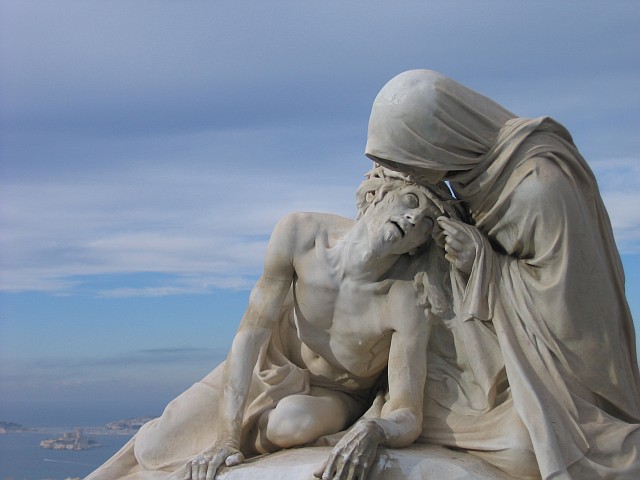
Courage and faith exemplify Mary through out the gospel accounts. When she goes to the temple a week after Jesus birth simeon the one person in the Christmas story who seems to be able to look beyond the child to see the shadow of the cross tells Mary that a sword will pierce her soul she stores even these things in her heart. In John’s gospel we see her prepared to approach Jesus about the wine problem at the wedding in Canna, looking to her son to do something, even though his time had not come. Maybe in a moment of doubt and confusion in Marks gospel it tells us that she and Jesus brothers came to bring him home fearing that he had become deranged, it took courage to question what she had stored in her heart. She is there at the cross, as her son is brutally and unjustly crucified. She receives his kindness as Jesus asks his much beloved friend to care for his most beloved mother. She is also there in the upper room at Pentecost, knowing her son has risen from the dead and faithfully standing with his disciples. This is the woman of faith and courage that God chose to carry and nurture his only begotten son.

For us today there is there are two things I want to draw from Mary.

Firstly, that we need both faith in God and the courage to live that faith out. Seeing the kingdom of God being born into the world today not only takes convictions it takes the courage of our convictions. Our faith needs to be put into action. Mary’s words “ I am your servant may it happen to me as you said” are not words of passive resignation to fate they are an active embrace of God’s will and purposes.


It takes courage and faith to allow God’s kingdom to be our priority. For example in Mary’s song it tells us the good news of Jesus Christ will mean that the poor receive their fill and the rich go away empty handed. We tend to want to think that the rich are blessed, that we are blessed in this country with what we have, but the gospel call on people who have much, is that much is expected. Jesus calls us to side with the poor and the powerless in our world and it takes courage to go against the flow of consumerism and materialism. It takes courage to speak up and say that we follow a different set of values and truths when the situation demands it, knowing the resistance we will face, the possible scorn and being written off.

Secondly, we need to realise that God is able to use the humble and lowly to achieve great things for him. The fact that a young Jewish girl of faith could be chosen to bear the son of God shows that we too who ever we are can be used to achieve God’s plans and purposes in the world if we will be prepared to respond with faith and courage. It does however take faith and courage.


Wednesday, December 7, 2011

Unpaking the nativity (An Advent series) part 1: Joseph a man of integrity and compassion (Matthew 2:18-25)


When I was growing up I knew Christmas was coming when my mum would go to the hall cupboard and search round amongst the impossibly large number of boxes that lived on the top shelf. She’d eventually find what she was looking for and bring down a blue box with a clear plastic window in the front and open it up. She’d take out what was housed inside, unpack it from all the tissue paper and place it on the mantelpiece in the lounge. It was a nativity scene and it would sit there, in pride of place, from sometime around the beginning of December till we came back from our family holiday after Christmas it was designed to be a focus for us of what Christmas was all about.

As I reflect back on it I think it’s rather strange that coming from our protestant tradition, which had rejected icons and religious statues that we were happy to have this stable and figurines to remind us of Christ’s birth. But when you think about it they were appropriate as a reminder of the fact that the infinite, eternal, God who is spirit, revealed himself to us by stepping into the physical realm of human beings.

I have to admit that the nativity scene has lost some of its power in the midst of the electronic mass media we live in today. We are used to airbrushed scenes on the cover of Christmas cards. It’s almost become the ultimate hallmark moment. Advent is the season in the Church calendar when we prepare ourselves for Christmas, we prepare ourselves to celebrate the birth of Christ, leading up to Christmas this year I want to invite you to join in our family tradition and unpack the nativity scene. Not physically rather unpack has come to be a term used in academic circles these days to mean explore and understand. Let’s Unpack the nativity by looking again at each of the figures we are used to seeing there and exploring what they have to share with us of the good news of Jesus Christ.

I want to start this morning with Joseph, he’s almost the forgotten man in the nativity. Quite rightly we get most of our understanding of Christmas from Luke’s gospel, which looks to Mary as its source. It is Mary’s story and Luke tells us that Mary is to be seen as the most blessed women. Matthew’s Gospel emphasises Joseph’s side of the story but what we tend to emphasis is the star and the magi coming from the east. Perhaps the other reason is that we enjoy the celebration and while Luke tells us that Mary stored these things up in her heart as American pastor Chris Benjamin says For Joseph it was a matter of things he struggled with in his soul.

Joseph is a man of real integrity and compassion and a man of faith who trusts God. The gospel tells us that Joseph was betrothed to be married to Mary when she was found to be pregnant. In first century Jewish culture a couple who were betrothed to each other engaged were deemed to be married but did not yet live together as man and wife. For Mary to become pregnant was a real scandal, if Joseph was the father it put them both in a position of shame within the community and if he wasn’t the father, as he knew that he wasn’t, it meant that Mary was in danger of the worst penalty of the law. AS it says in Deuterononomy 22:23-24 the penalty for this sort of infidelity was death by stoning.

Now in our romantic love saturated soap opera world maybe Joseph would have simply said that it didn’t matter and that he loved her anyway and would marry her. But Joseph was a religious man and was aware of the fact that he could not simply go against the Law of Moses. He is in a moral dilemma. After a while he decides that the best thing for him to do is send Mary away to her relatives in the hill country and while she is there he will initiate a quite divorce with some sympathetic officials and he would wear some shame for this but at least he would save Mary and her family form the worst of the shame and possible consequences. As we see later in the gospel Jesus would be drawn into the debate of the age on marriage about how strictly the Law of Moses on divorce was to be adhered to. One school saw Moses divorce clause as only being that a man could divorce his wife only for infidelity and other saw it as meaning he could divorce his wife if she displeased him in any way. Jesus response was to affirm the stricter interpretation of the law and say that God had put that clause in the law because of the harness of mans hearts and in Matthew 19 we have the words that are still often used at weddings ‘therefore what God has joined let no one separate’. Joseph under either understanding of the law was in the right to divorce Mary and would be seen as being very compassionate to do it in this quite way. He wants to do the right thing by her and society and by God, but what a dilemma to find oneself in; Stuck between the law and compassion.

But then we see that the angel of the Lord comes to him in a dream, I wonder how many sleepless nights he had wrestling with this one and as he finally falls off to sleep he has a dream. The angel of the lord appears to him and tells him that Mary is pregnant by the Holy Spirit and that this is God’s plan and that he should not be afraid to take Mary as his wife and not to have sex with her before the baby is born. In fact the angel tells him to call the child Yeshua which we now by the Greek equivalent, Jesus because he will save his people. This is grace and good news breathed into the situation for Joseph. It gives him not an easy road to walk but one where he can by faith trusts God and marries Mary. The gospel message here is that God is with us and in the midst of Josephs wrestling and struggling God draws near and provides a gracious way forwards.

It would still have been a hard wedding day, she would have come back from staying with her Aunt Elizabeth and the evidence would be obvious and the people in the town would talk and whisper and make assumptions and even snide remarks. But Joseph is a man of integrity a man of faith whose trust in God is lived out in the way he acts and as we see from the gospel story he love Mary, he takes on the responsibility for Mary and the child. He accepts this knowing that it is God’s plan. He acts as a father for the boy. He brings him to the temple in accordance to the law and names him Jesus. He leaves all that he has and in response to another dream takes Mary and the child to Egypt as refugees from Herod’s tyrannical death squads. We know that he provided for Jesus and his family until his death. That he brought them up in the Jewish faith, every year they would come to Jerusalem for the Passover. On his twelfth birthday in Jesus speaking to his parents we can see that Jesus was aware of who his real father was. He is a man of integrity compassion and faith a good man for God to leave his only son to raise and nurture.

I want to suggest two things that this means for us today.

Firstly we need Joseph’s example today. In film and media we are presented these days with images of weak men. Maybe not weak in the arm and leg but weak when it comes to moral fortitude, they are easily led around by another part of their anatomy rather than their brain. They give in quickly to opportunity and temptation. It could be argued that this reinforces or reflects real life that we are living in a fatherless generation: Men find it easy to walk away from their responsibilities for the pursuit of personal fulfilment. AS a character in the film ‘Boyz’n’da hood’ says any swing dick can make a baby but it takes a real man to be a father. Even business and politics are short on men of strong moral fibre as Leonard sweet said of the 1990's‘ The decade that brought us the greatest burst of literature on leadership also brought us corporate scandals with Enron and world.com and Adelphia and Tyco and Global Crossing and Arthur Anderson, and they have brought us President Bill “it-depends –on-what-the meaning of is ‘is’ Clinton.” Then Eight out of ten people in a recent poll expected that top executives would take improper actions to help themselves at the expense of their companies, and as we are living through the fall out of the credit crunch where executives looked after their own obscenely sized bonuses and people have occupied city financial centers and city centers round the world protesting against cooperate greed. You have to say with a down cast heart that the church doesn’t have the best track record recently either. So Joseph is a good role model for us of a man of integrity and faith. He shouldn’t just be seen as the guy at the back of the stable whose major role seems to occur when he’s sleeping. Rather he should be acknowledged and honoured for his righteousness and compassion, his integrity and faith they are characteristics that God chose to play an important part in the formative years of Jesus life. They are characteristics we need to allow to play an important part in our lives and in the formation of our children.

Secondly, Joseph offers hope to all who would find themselves struggling with moral dilemma trying to live with doing the right thing and the pull of compassion and love. He shows us that with the Good news of Jesus Christ that there is the dream of hope, that God is with us in the midst of our wrestling and desire to live for him and able to bring his grace into our lives and situations. It’s interesting to note that this God with us solution wasn’t a everything is now wonderful Hollywood ending , he still had to deal with hardship and shame but in the end it was a way that God was able to bring good not only for this couple, but the whole world. And that is the hope of the gospel “God is with us” and while that is not going to mean its going to be all beer and lamingtons all rides into the sunset and string quartets, it does mean that if we are willing to allow the God who is with us to speak into our situations and then come awake and follow his word that we will see God’s good worked out in it. In being willing to dream of a God with us possibility we too can see Christ being born or at least brought into our circumstances and world.

As we unpack the nativity we can see that Joseph is not just the quite extra in the background that he is an important part of the story he is an essential part of God’s plan. He is an example for us of a man of integrity and faith fit to nurture Jesus. He also experiences the hope that this child, this Immanuel, this God with us can bring to our lives as we wrestle to serve God and do what is right, he shows us that in our lives today we too can know hope and dream of new possibilities because of the child who is born in the stable. In your life today in all you face dilemmas and challenges to your integrity hear again the good news of hope and God with us.

Sunday, November 20, 2011

Steve Holmes on "Contemporary Worship and Contemplative Prayer" A recommendation.

I enjoy the insights of Steve Holmes a Baptist minister and  lecturer in Theology at St Mary's College St Andrew's. His most recent blog entry on "Contemplative Prayer and Contemporary Worship", reflects both the direction I feel myself moving and some of the insights from my study leave on New Monasticism.

His blog is called shored fragments and is well worth reading and subscribing to.

Monday, November 7, 2011

Emerging Churches: Creating Christian Community in Postmodern Cultures: A review and reflection

Eddie Gibbs and Ryan Bolger's book Emerging Churches: Creating Christian Community in Postmodern Cultures ( 2005, Baker Academic) is an excellent exploration of what is known (or maybe formally known) as the Emerging Church Movement. It has the scholarly rigger of being part of Ryan Bolger's Doctoral study and a back up research for one of Eddie Gibbs earlier books. I appreciated the way in which these authors strived to present the Emerging Church, in many of it's a different emerging forms and expressions in the US and UK, in its own words,  as Gibbs and Bolger state in their conclusion.

"We wanted emerging church leaders to be heard in their own words. Our roles have been that of interpreter and commentator. We refrained from acting as censors or critics when something was said about which we have our own opinions. We sort to include leaders who had walked away from their previous ecclesial tradition out of frustration and disillusionment as well as those who continue to work within a traditional, seeking its transformation."

With this ethos the voices of these attempts of doing a new and fresh expression of church within a post modern and post Christendom context spoke, and spoke to me.

Gibbs and Ryan started their book by putting the emerging church into the context of a whole raft of different christian responses to the changing fabric of society in the west. Gen-X Churches, both stand alone and the church within a church model, developing churches and services that reflected and catered for generations so culturally different than the previous ones.New Paradigm churches, expressions of a particular tradition repackaged (sorry my word) in a new cultural context (eg Mars Hill in Seattle is a new paradigm reformed church), seeker friendly formats and finally in what has become known as emerging church. It was helpful for me as I reflect back on over twenty years of ministry to see that I had been involved in all those developing expressions of church, investing in some of the conflicts and controversies associated with them and open to their shortcomings and pit falls as well as their possibilities and strengths. In reading the short bio's of emerging church leaders in the first appendix of this book I discovered I had shared a lot of the same journey of many emerging church leaders.

This brief historical also helped me to put some perspective on the three years of church planting that I have been involved in as well. I wish I had read this book before I started with Studentsoul Auckland. Many of the church planting material I had read before this was so caught up in a model of church that reflected a different, modernistic understanding of church planting that I found myself looking more at the metrics of Attendance and becoming another version of the wannabe mega churches. What we eventually became was more an expression of emerging church (Well a compromise really).

Gibbs and Ryan then spend the majority of their book looking at nine trends or markers of the emerging church.

Three central trends.

1. Identifying with the life of Jesus as a model for life: focusing on Kingdom living
2. Transforming secular space: emerging church rejects the modernistic separation of secular and sacred space. To the extent that kingdom living happens in both. That God is active and able to peak through all things and have a commitment to the idea of Missio Dei, That the spirit is at work in the world and Christians are called to venture out and connect with what God is already doing.
3. Living in Community; That church is not about buildings and what we do on Sunday but is about living a Christ centered life together as a community on a 24/7 basis. Which means not just a development of physical community, although some have gone down the line on new monasticism, but rather than church is about what we do together and any worship event comes out of that.

Gibbs and Ryan then see six other rends in emerging church that flow out of that.

4. Communities and evangelism are about welcoming the stranger. All are welcomed to be part of community.

5. Serving with Generosity: emerging churches believe in serving others but not as some sort of bait for the evangelistic hook but because it is an outpouring of the love they have received from Christ. Not having to keep a modernistic church structure of buildings, paid staff, professional clergy etc going they are able to share what they have with those in need.

6. Participating as Producers: emerging churches look to include all their members in worship and community. They see much of the traditional church and mega church movements as having worship as a consumer product, rather than being an event where all can use their gifts and abilities to give thanks to God, and lead the community.

7. Creating as a created being: emerging church affirms creativity and art. There is an ethos that everyone can contribute to this and value is not put on professionalism but expression. Community size is often regulated by how big a group can be and still maintain and allow space for people to contribute creatively.

8. Leading as a body. Emerging church see leadership as a body ministry, decisions and direction and vision come from the group as a whole. Leadership exercises a role within that and is not vested in one person but is taken up by those who are gifted and impassioned in such areas. The role of the leader is seen as that of facilitator, allowing space for others to exercise their gifts and abilities. There is no professional clergy. The emphasis is on a sustainable model of bi vocational ministers in a priesthood of all believers.

9. Merging Ancient and Contemporary spirituality. Emerging church seeks to explore the heritage of spiritual disciplines, both personal and communal, from the whole of the church family and past and adapt them as a rhythm of life for today's world.

AS i read this book I couldn't help but focus on Studentsoul Auckland. To a certain extent we unknowingly really were trying to walk this emerging track with a leader (me) who had more invested in a modernistic understanding of church. I now know more than ever that Mic who was one of our first people to come along was in actual fact a real god send and leader. I should have listened more to him as he expressed church more as a community, desired to serve the least as an act of worship and invite people to participate more in our worship times.

One of the struggles we had was the fact that I was thinking in terms of a modernistic church that was able to grow to support a professional pastor (me) and it is interesting in the three years I was doing Studentsoul, being employed as a second chaplain at Auckland uni. was more a bi vocational ministry, if I had seen it as such. On the flip side when it came to refinancing more time, the faithful people who had seen it as a project were looking for more progress along the lines of a church rather than a developing community.

I really struggled with the dilemma between adopting an aggressive advertising programme and wanting things to develop more organically through relationships and community. In the end what growth numerically we had came from community involvement and building a relationship with me. Assessing size as a success also was caught between the emerging paradigm that it was depth of community that mattered and wanting to be big enough to be self sustaining financially also was a tension.

AS a group we defined our vision almost by accident. the teaching style invited everyone to be involved in the exploration and interpreting of scripture.

After reading this book I am torn even more between looking for employment simply to make a living so I can continue developing and working with this small community and its mission amongst Uni students and finding a place that will sustain me and my family in the mainline denomination I serve.  

Thursday, November 3, 2011

The Mystic Way Of Evangelism: A contemplative Vision For Christian Outreach (Elaine Heath): A reflection more than a review.

 Elaine Heath's book The Mystic Way of Evangelism:A Contemplative Vision for Christian Outreach (2008, Baker Academic, Grand Rapids)  is profound. I am a Tui Billboard indoctrinated Kiwi (sorry to overseas readers for this bit of kiwiana) so when I read Brian McLaren's endorsement to this book, that his hunch is that it just might be (for some readers) the most important book they read this year, I had to reply "Yeah Right" ( My son tells me that this Kiwi expression is the only example in the English language of two positives making a negative)... But after reading the book I had to say I changed my opinion  "Yeah... right" it was a good hunch Brian, this is an important book.

Heath starts by giving a definition of evangelism that counter acts the vision many have when the word is used of programmes, techniques, and used car salesman like rants or even the targeted person of 'freindship evangelism. She says "Evangelism rightly understood is the holistic initiation of people into the reign of God as revealed in Jesus Christ." and then fleshes that out  in stating
"evangelism is intrinsically relational, the outcome of love of neighbor, for to love neighbor is to share the love of God holistically. The proper context for evangelism is authentic Christian community, where the expression of loving community is the greatest apologetic for the gospel."

Heath then suggests that the Mystics of the Christian tradition have significant insights, understandings and light to share with the church today. In fact the wisdom they share can be seen to offer an alternative vision for doing church and outreach. She points out that Mystics being private people is false. Their seeking after God and holiness is anything but...

"Christian mysticism is about the holy transformation of the mystic by God, so that the mystic becomes instrumental in the holy transformation of God's people. This transformation always results in missional action in the world. The idea that mysticism is private and removed from the rugged world of ministry is false."

After a helpful explanation of the two main streams of mystic experience Apophatic (emptiness and unknowing) and Kataphatic (a mediated knowing), Heath structures her exploration of the church developing a contemplative vision for outreach through the threefold pathway common to mystical thinking.  Purgation, Illumination and Union.

I found Heath's idea that the church in the west, (applicable to New Zealand as much as Heath's USAmerican setting) is passing through a long dark night of the soul very helpful and poignant. There is a spiritual dryness and a flailing about looking for something that will satisfy that dryness going on in the church today. Heath sees this as a process through which the church is able to de-idolise lot of its structures, rituals, buildings and assumptions to again focus and come to God. She says it is the process of by which we realise we have mistaken the finger pointing to the moon for the moon itself. French social theorist Jean Baudrillard talks of religion as a simulacra, a model for which the reality behind no longer exists. There is truth in that assertion that we have built and worship a glorified simulacra that needs to be stripped away... but as we do we do not discover a nothingness rather maybe again we will discover the reality of God. "welcome to the desert of the real" just maybe the place in which we encounter the one... I know very Matrix.

While I was wrestling with Heath's text I was also reading through the first few chapters of Ezekiel which has at the end of each of its harsh pronouncements of doom repeats the phrase "then you will know that I alone am the LORD". Heath puts the decline in the church in the west in the same category as Israel heading into exile, a stripping away of idols, even the temple worship itself, so that the people of God might again find that " I alone am the LORD". Into this collective dark night of the soul Heath says the mystics who have been there before us have illumination that may herald a new dawn.

I have to admit I have not really read or reflected on the Christian mystics and it was refreshing and indeed illuminating to be introduced to many of these Christian forebears. Heath picked two mystics balancing ancient and modern as well as male and female, western and eastern, catholic and protestant to shed light on the church in the night. She looks to Julian of Norwich and Hans Urs Von Belthasar to set the ground works for an alternative narrative of a non-punitive doctrine of atonement, looking at "human brokenness as the universal context for evangelism'. Picking up an understanding of restoration and recreation as an outworking of God's love for humanity.

She then explores the ministry of Methodist Preacher and Theologian Phoebe Palmer and Russian Orthodox hieromonk Father Arseny, to explore the idea of Ministry as Holiness . Both Palmer and Arseny gave themselves to serving and caring for others in the midst of suffering and oppression that bought liberty and transformation.

Heath moves on to explore this idea of holiness in ministry as Kenosis (an emptying of self) through the lives of Henri Nouwen (the mystic I do know and whose writing I have found beneficial and transformative) and Thomas R Kelly. That once we come home to love and know that we are Beloved of God we can give invest ourselves into loving others.

She then moves on to explore the threefold wound of racism, sexism and classism and how the mystics have confronted that and provide a way forwards. She uses the ministry of the abused daughter a freed slave Julia Foote and Mechthild of Magdeburg and the Beguines to explore this. She asserts the need for the church to address this three fold wound saying that amongst other stories the story of the church in America (and yes in the west) has been 'A long story of church-sanctioned in justice as women and ethnic minorities have been forced to live their faith from the margins". And that the church in the night needs to confess and repent of this.

Finally Heath explores the  life of Bonaventure and John Woolman to explore the need for the church in the night to rediscover a care for the earth. To heal the split between the sacred and the secular which is a pillar of modernity.

In her third section Union, Heath uses narrative theology to paint a possible future for the church, that comes out of the purging of the night and an embarrassing of the illumination of te mystics. I have to admit her story of a church that lives out Heath's vision is compelling and refreshing and hope filled. It is an important piece of Prophetic imagination, that leave me saying ... Yes Lord.

If anything Heath's book for me opens up a new way of thinking. It is easy for us to get used to hearing one voice, one stream, one thread of Christian thought and to think that it is the overall meta-narrative. It becomes the lens through which we read Scripture, do theology and view the world. For me Heath opens up another lens.

Heath has a lot to say to me and to the Church. Her vision for a new way of living and reaching out is compelling. As I have moved on from reading her book to 'The Emerging Churches" by Eddie Gibbs and Ryan Blogger, I can see that there are many elements of her work that echoes if not resounds in that movement.

On a pragmatic level,I applaud  Heaths assertion that Contemplative prayer needs to be at the center of how people are formed and shaped for ministry. Her vision that in the future churches will have teams of bi vocational ministers (those who work and pastor) who reflect the gender and ethnic diversity of the communities they are called to serve is significant. She has taken Brian McLaren's (Dorothy on Leadership) assertion that the leaders of tomorrow will not be professional but amateurs (done out of love) and imagined it real terms. The model of a professional clergy and maintaining buildings and programmes as a focus for church life and outreach I believe are not sustainable. Embarrassing and inviting people to journey will us rather than to believe then belong I find attractive.

In the end this book leaves me torn. Torn between having so much of who I am invested in what is the church in the night and sadly the security it offers one... One of my leanings in attempting to do a church plant for me personally is how much I have been conditioned to the institutions... and the possibility of something new. I hope my response to this desert of the real (again in a Matrix Moment) is not that of the Character 'Cypher'... I want to go back into the Matrix...  Watch this space.

Wednesday, November 2, 2011

One Year Bible Online... A Bible Reading Spiritual discipline tool

I hope people find this helpful. For the past few years I have been trying to keep the spiritual discipline of reading through the Bible each year. A friend introduced me to the "One Year Bible" which cuts the Bible up into an Old Testament reading, New Testament reading, Psalm and Proverbs for each day of the year. It means that you read through both Testaments each year once and the book of Psalms and Proverbs twice.

I went and bought a pocket version of the "One Year Bible' thinking that its size would enable me to carry it with me. However the text size made it very hard to read... and I have to admit that I often overlooked it. Now I've found "One Year Bible Online" and its a great tool for this discipline.

The site uses biblegateway.com for its text and for me text size is no longer a problem and as my laptop is not often away from me I find I am  a lot more faithful in this discipline. It also means that I have the ability to easily change versions to gain some clarity on verses and words I am wrestling with. Yes I still have my pocket book version so if I'm going away from being online I can revert to that one.

It is interesting however that I went to speak at a Church camp last month and found I had git so used ti having my Bible on line that I forgotten to bring a print version with me. I  don't have a smart phone and know have a bible in kindle for pc library.

Tuesday, November 1, 2011

Sinners and Saints (2010): A movie review of sorts.

I have to admit that I watched the DVD of 'Sinners and Saints' (2010) because of the title, it intrigued me and I wondered at how this title was going to develop in what is basically a noir re imagining of that classic of the 1980's cop and buddy movie genre 'Leathal Weapon".

It is a movie set in post Katrina New Orleans and like a lot of movies I have seen set in the same city it does seem to have the noir quality of the disillusion with the American dream. Right from the opening shoot out it shows a cityscape broken and run down, intermixing it with the hope of a reconstruction. In fact with the motif of helicopters hovering over ' A City Of Ruins' it , without the hopeful lyrics of Green Day and U2's 'The saints are comming', along with the shot out with automatic weapons leaves you to think that this is a city that could be like any city in our war torn world. The central character anti hero Sean Reilly, whose melancholy is played very well by Johnny Strong, as we find out in the movie is ex-special forces and was at home in that environment and seems to be stuck in its savagery.

As the  film progresses and we meet the villains of the piece we see the reality that the war has indeed come home. Here are mercenaries whose means and aims are directly related to a decade of the war on terror, and in a Lethal Weapon way use the war to further there own criminal activity. Reilly's friend Colins, draws him into this shadowy world, in a similar way to Sargent Mertog's Vietnam buddy does in Lethal Weapon.

  Kevin Phillips plays  Detective Will Ganz, who Reilly, with his street smarts is thrown together with as partner trying to solve a series of brutal tortures and murders. Ganz, (again like Lethal Weapon) invites Reilly into his 'Normal Rockwell like home and family. Reilly's own past is contrast with that with the loss of his son to leukemia and a divorce.  Reilly's expertise and (to quote another noir film and book LA Confidential) his adherence to violence, protect and ultimately endanger Ganz. A relationship of trust and friendship develops between Ganz and Reilly, both from such different backgrounds.

So did I get what I was looking for in the title some deep reflection on 'Sinner and Saint' yes without disclosing how the film works out, there is a sense of redemption and change in Reilly, Ganz we also find wrestling with what is right and wrong in the face of violence and brutality.

There are some moments that made me ponder. In one scene Reilly's friend Collins says, "there are people who do not want this war to end".  A shocking admission that there are people with so much invested in the war of terror that it should be continued and supported for personal reasons, and gain.

There is a brief discussion about providence, Ganz whose father was a preacher tells Reilly after a frank disclosure of his past pain and tragic losses, that there is a silver lining to any tragedy and that it was meant to be. It is portrayed in the movie quite rightly to be a shallow and inadequate answer to Reilly's suffering.

So in the end what can I say. The movie is well acted, gritty, violent, noit an easy watch (I'm not recommending it), gripping if not a little formulaic, and in my opinion homage to Lethal Weapon, it is definitely noir. There is no real answer to the riddle of its title, 'Sinner s and saints' except possibly that there isn't that much difference between them in this movie. Maybe in the end it is a reflection on the brokenness of humanity, on a individual, relational, urban and systemic basis. There is hope for healing and wholeness and for change, friendship and hospitality are shown as possible sources for it in the movie.